Lesson overview:
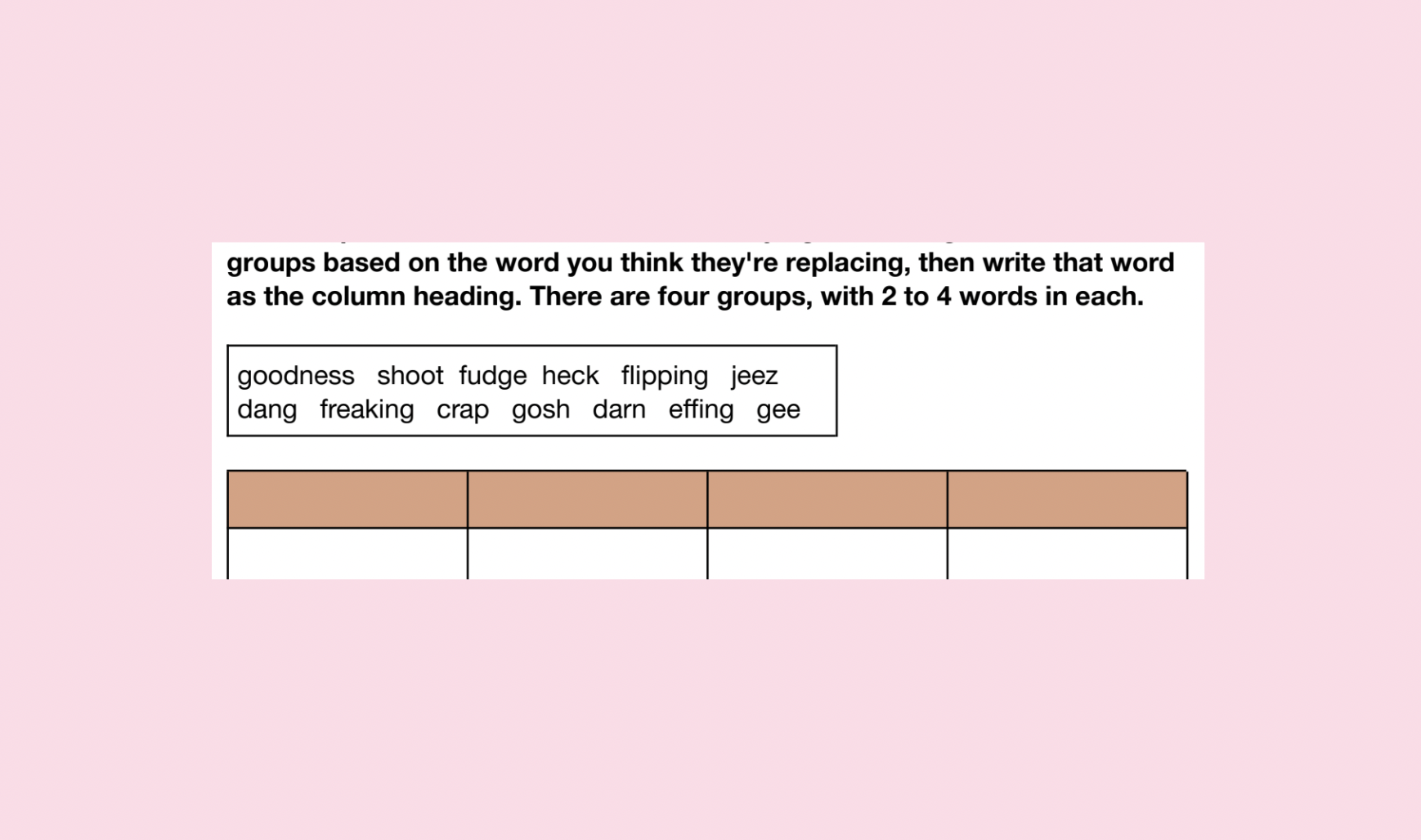
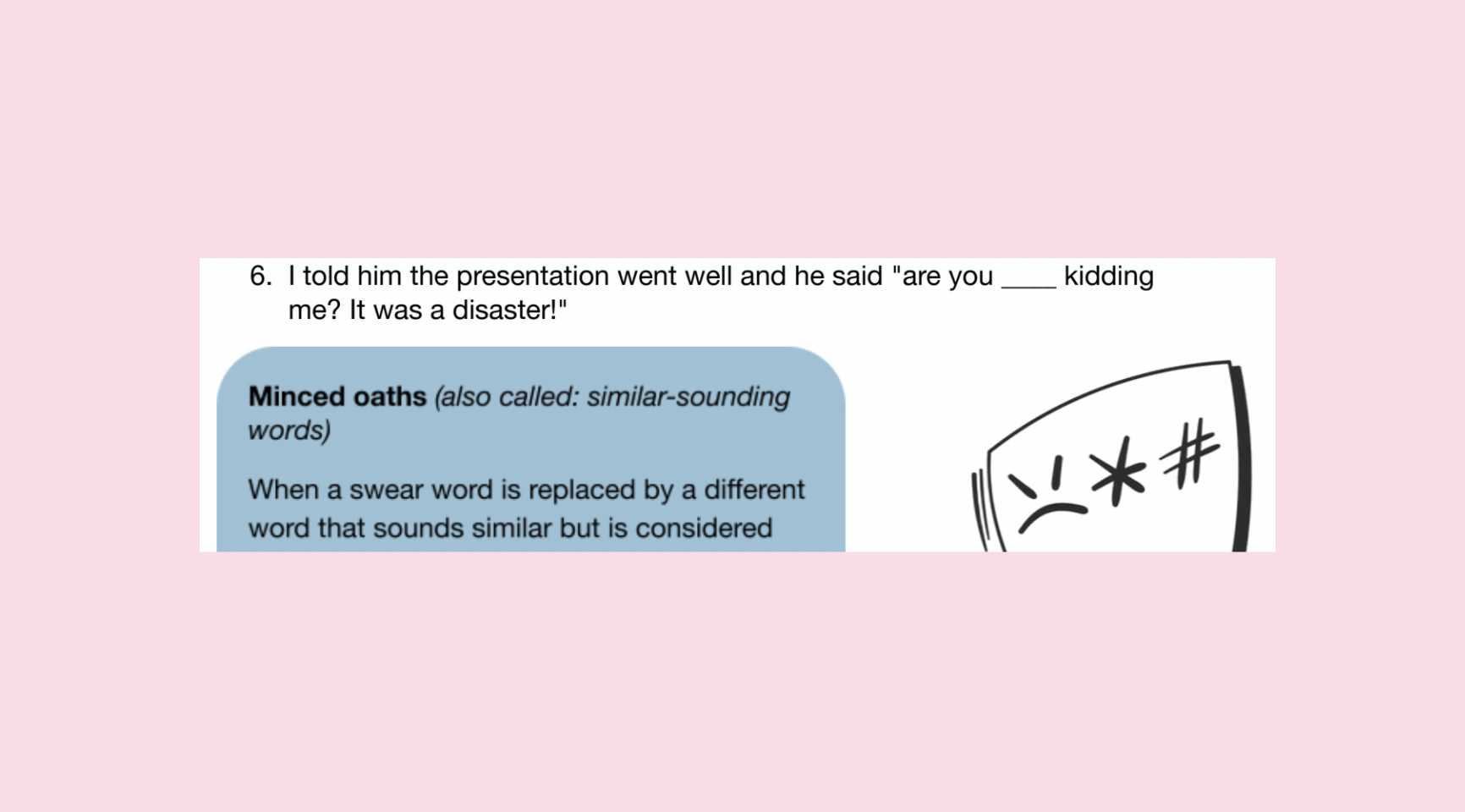
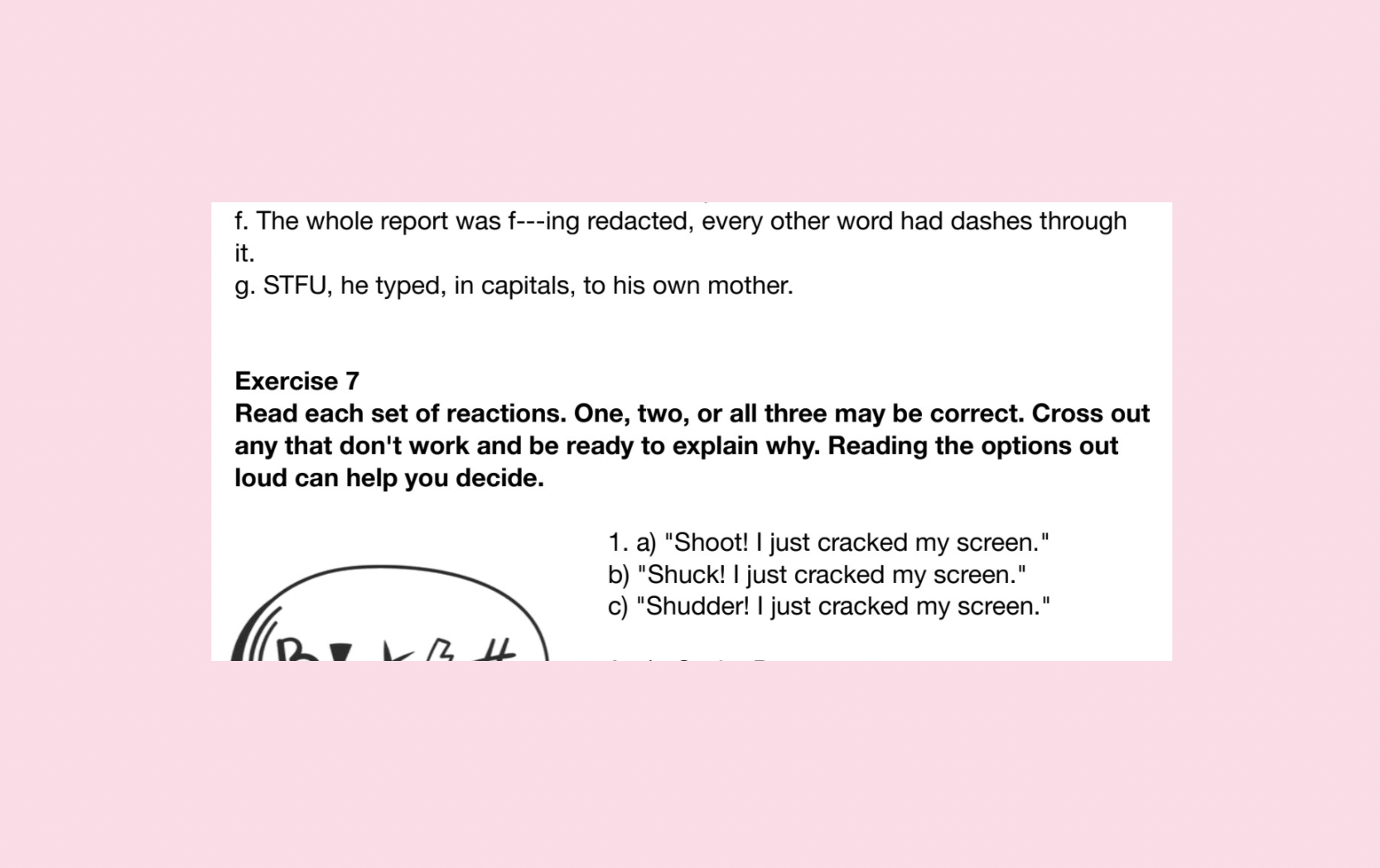
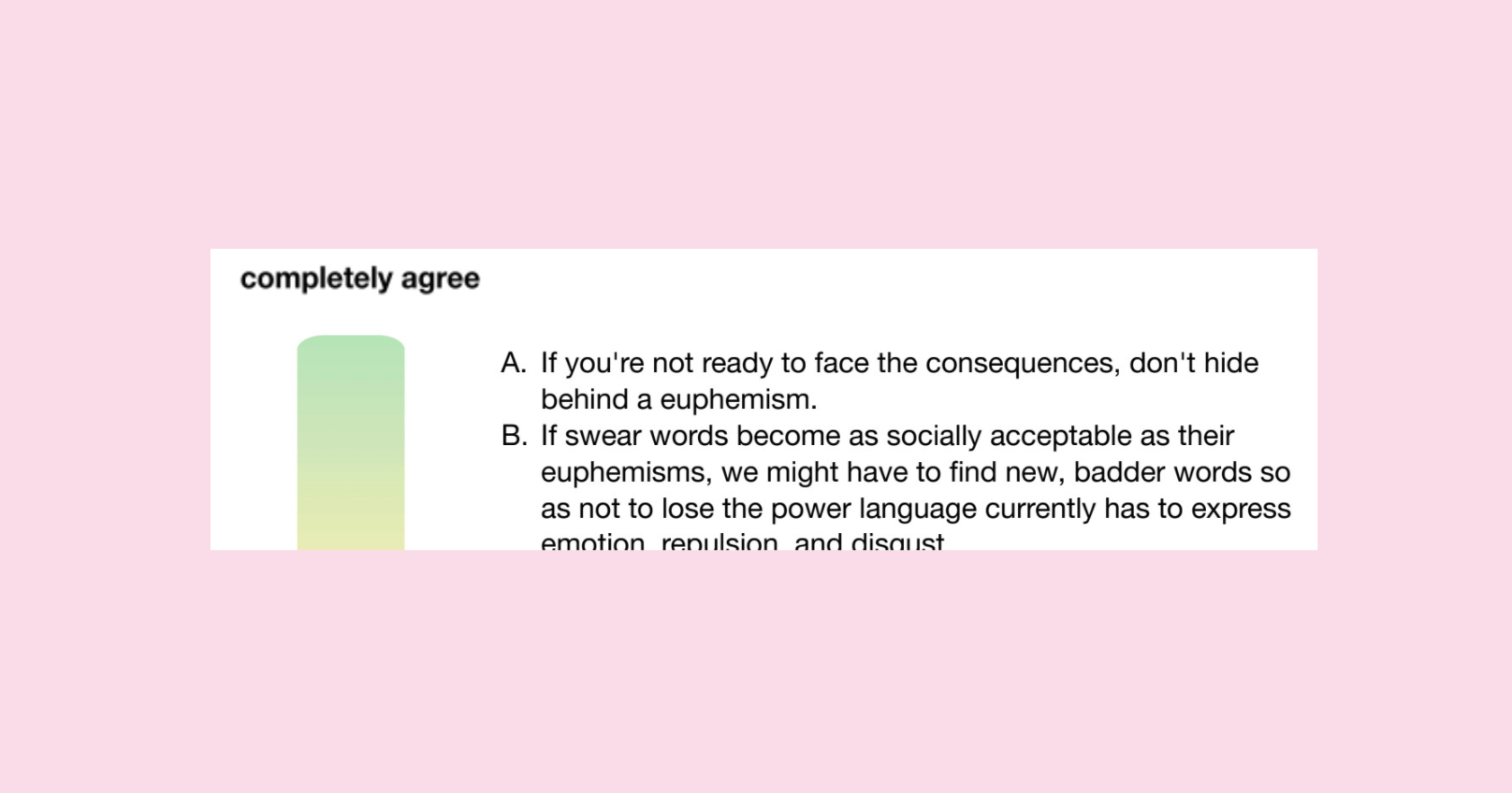
In this lesson, students explore how English speakers avoid, soften, or censor swear words in everyday communication. They discuss taboo language, learn what euphemisms are, and work with common techniques such as minced oaths, abbreviations, and censoring.
By the end of the lesson, students will be able to:
- recognise different ways people soften strong language
- understand why euphemisms are used
- react more appropriately to frustrating or surprising situations in English
Lead-in:
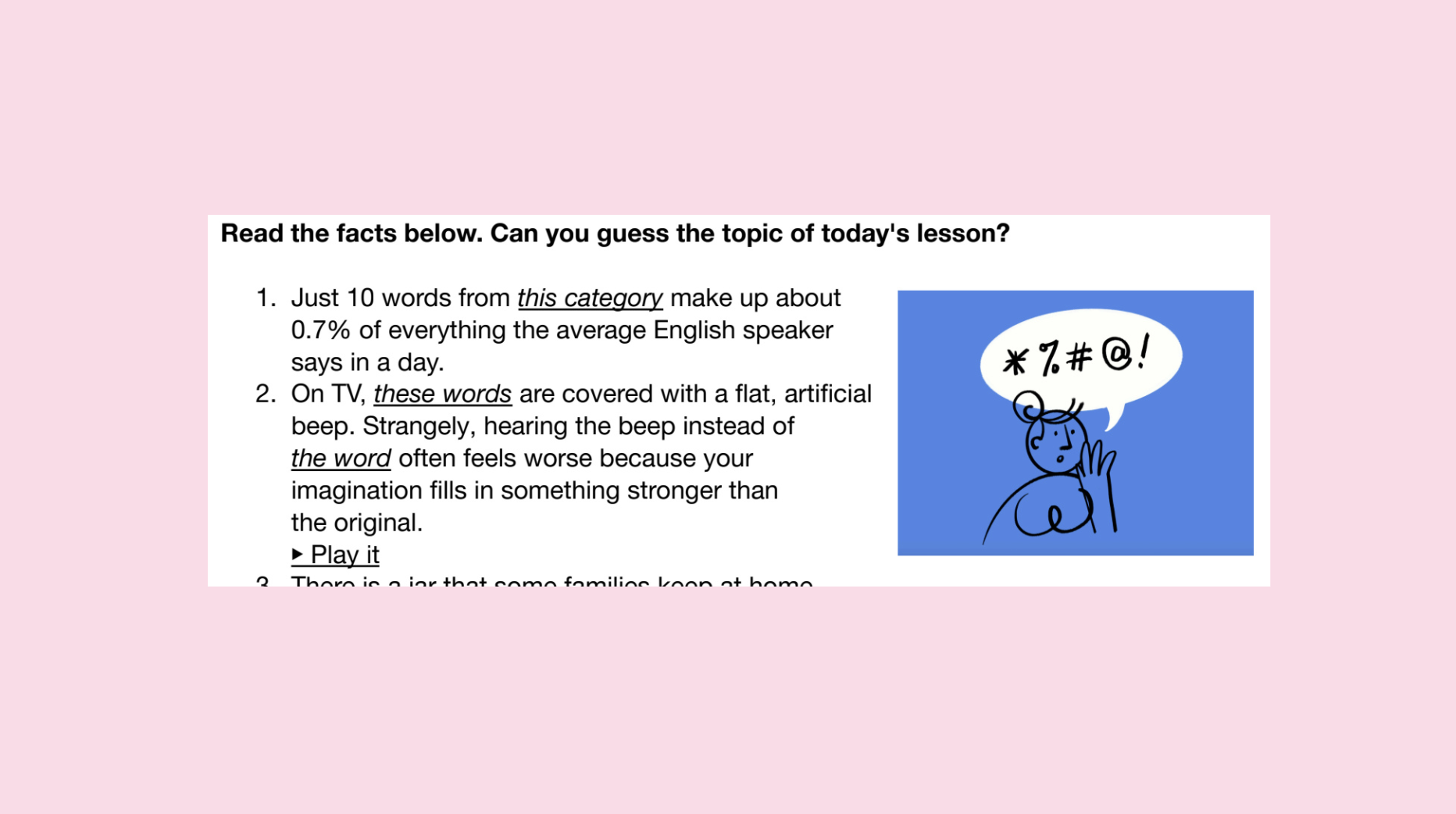
The lesson begins with surprising facts about swear words, including TV beeps, “swear jars,” and symbol strings like @#$%!, which immediately spark curiosity and discussion. Students then reflect on their own reactions to swearing, whether all bad words feel equally strong, and what people do when a topic feels too direct or uncomfortable to say plainly.
Teaching Tips
We've added a few helpful tips where they're most needed—just little nudges to make your lessons run more smoothly. Whether it's setting up a task or tackling a tricky grammar point, these suggestions are here to make your teaching life easier.