Lesson overview:
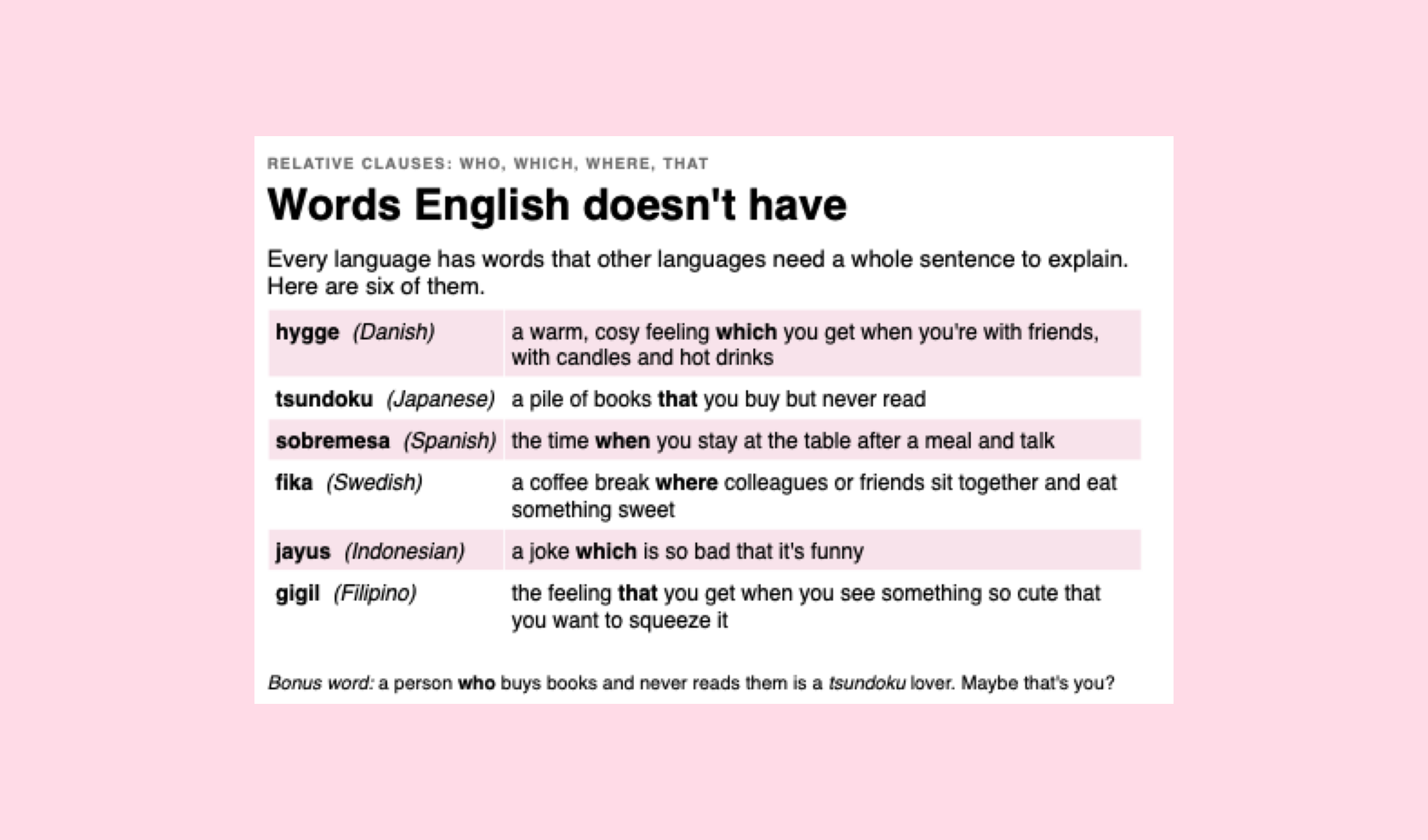
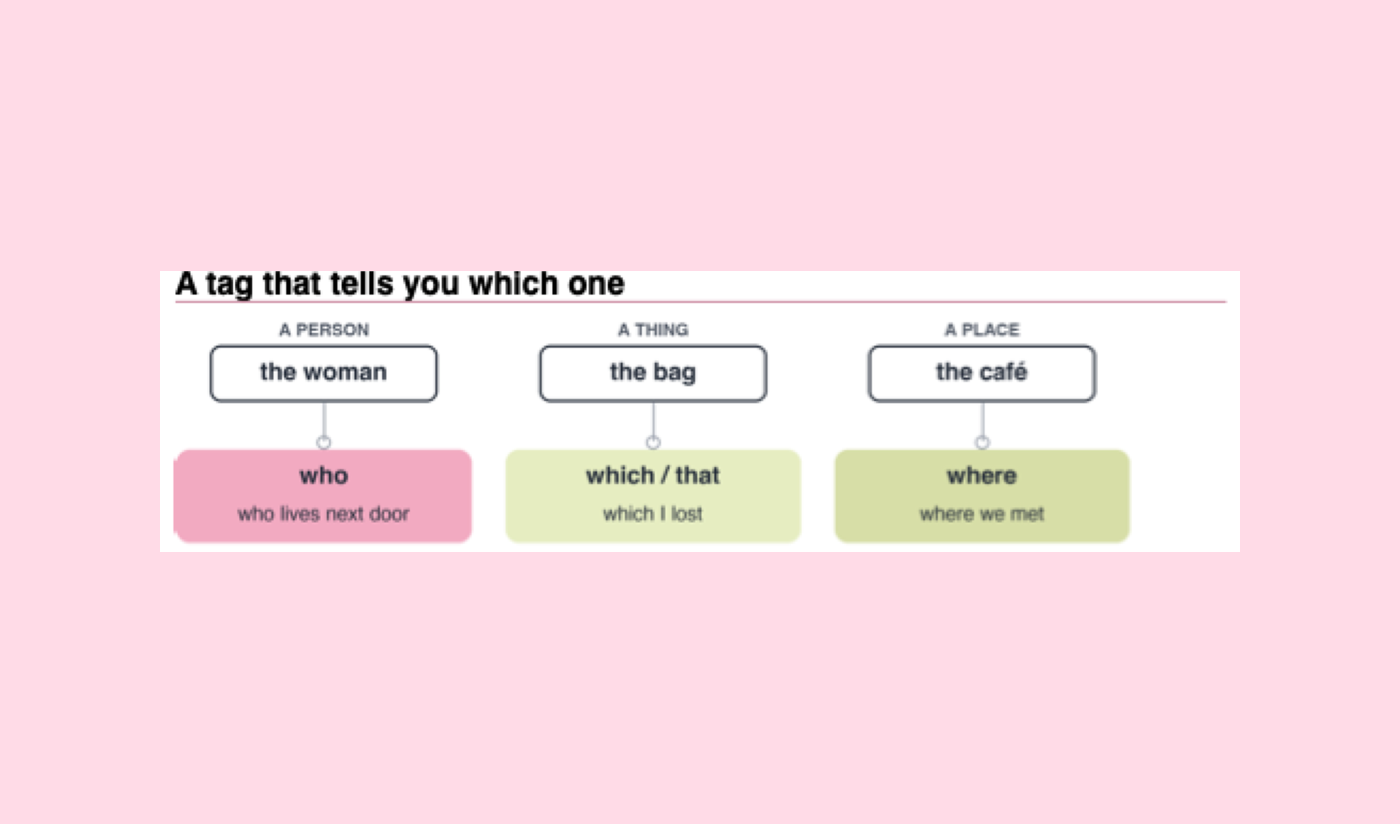
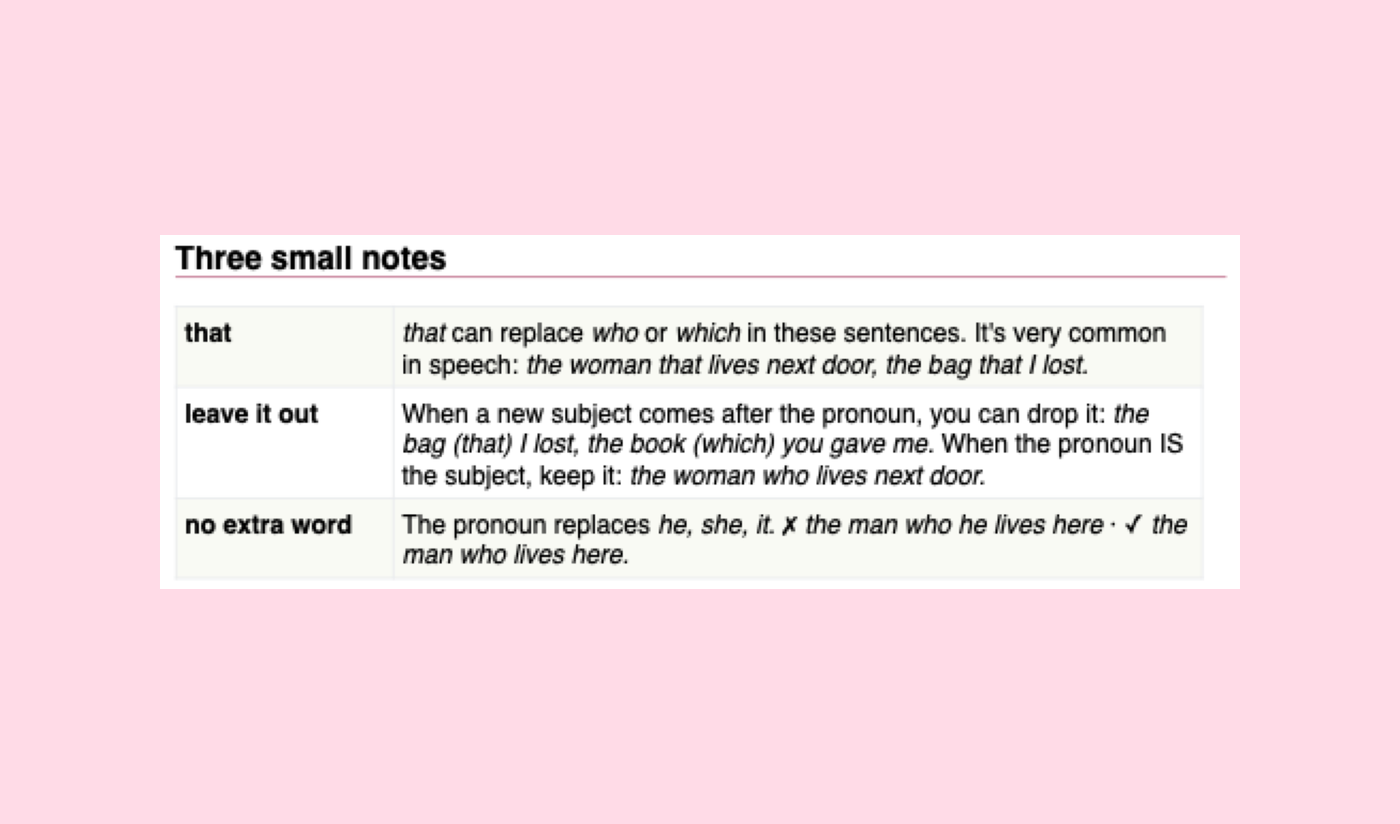
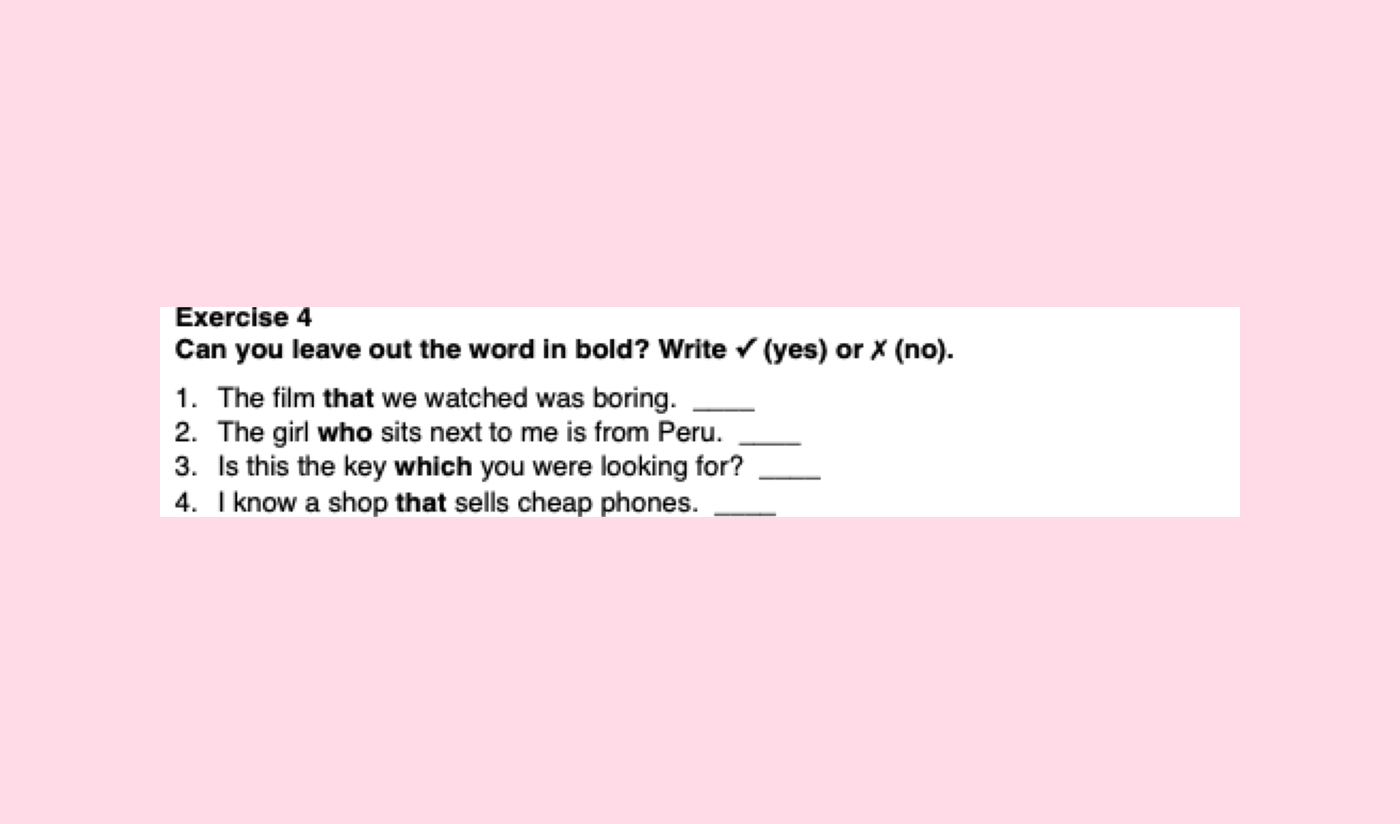
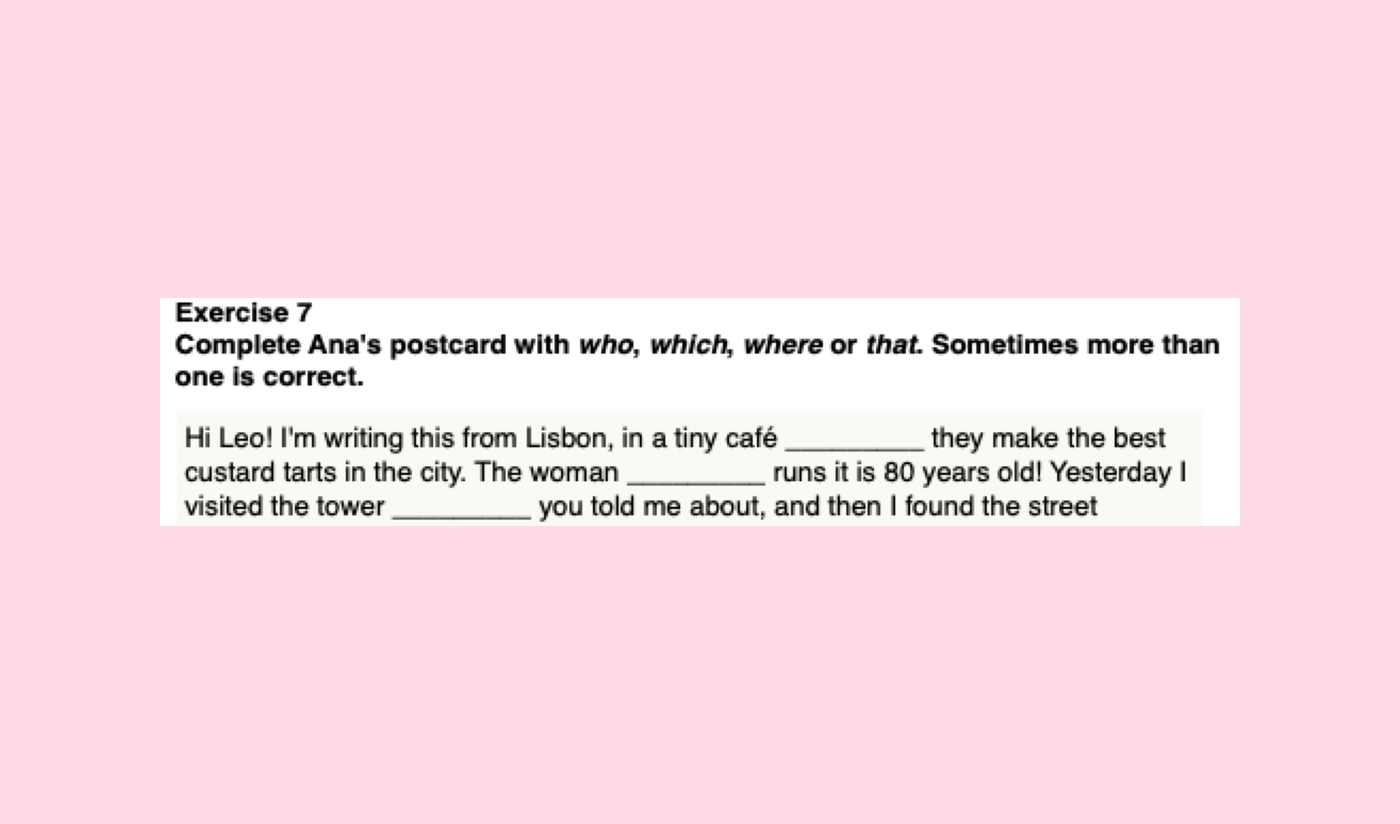
Tsundoku: a pile of books that you buy but never read. Japanese has one word for it. English needs a whole relative clause. That's the idea behind this worksheet. Relative clauses are how we define things, so it opens with a dictionary page of six words from other languages, including hygge (Danish), sobremesa (Spanish), fika (Swedish) and jayus (Indonesian), each explained with who, which, where, that or when. Students draw an arrow from each pronoun back to the noun it describes, then complete a table: who for people, which for things, where for places, that for people and things. A name-tag diagram shows the clause hanging from the noun it identifies. Three short notes cover that, when you can leave the pronoun out (the bag I lost) and the extra-pronoun mistake (the man who he lives here). The exercises include joining two sentences, writing definitions for everyday words (a kettle, a passport), deciding whether the pronoun can go, correcting mistakes, guessing words from definitions and a postcard from Lisbon. Students finish by inventing a word English needs and defining it.