Lesson overview:
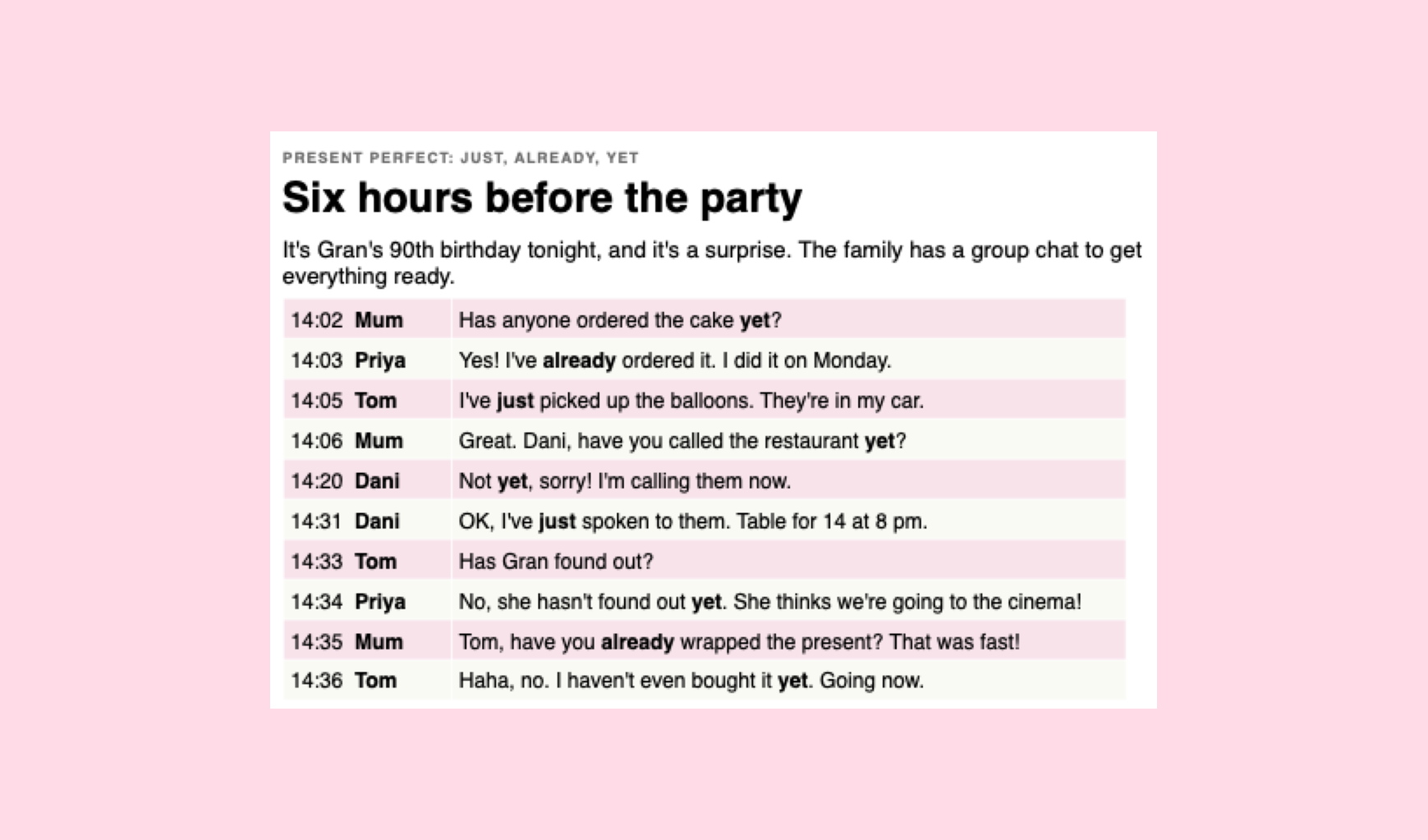
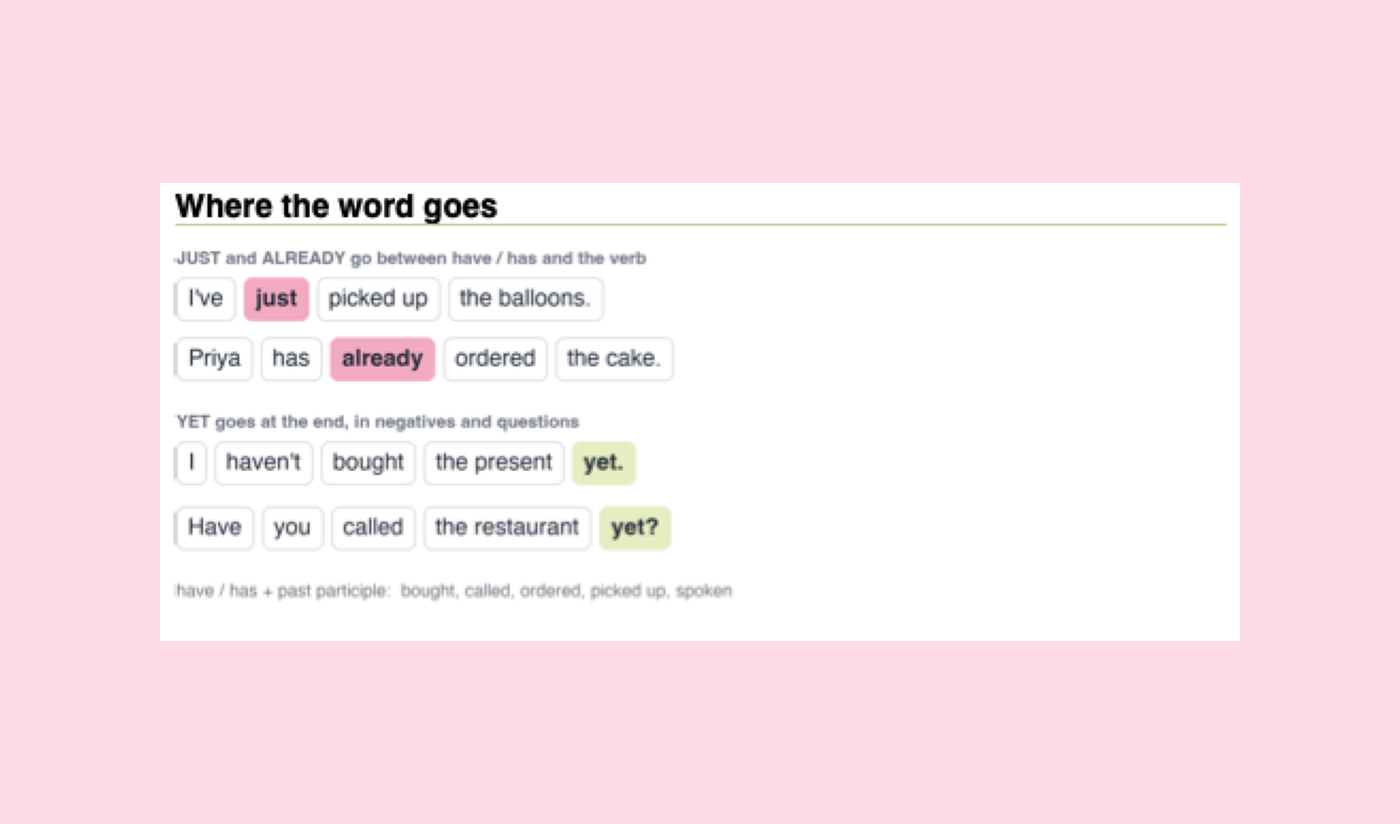
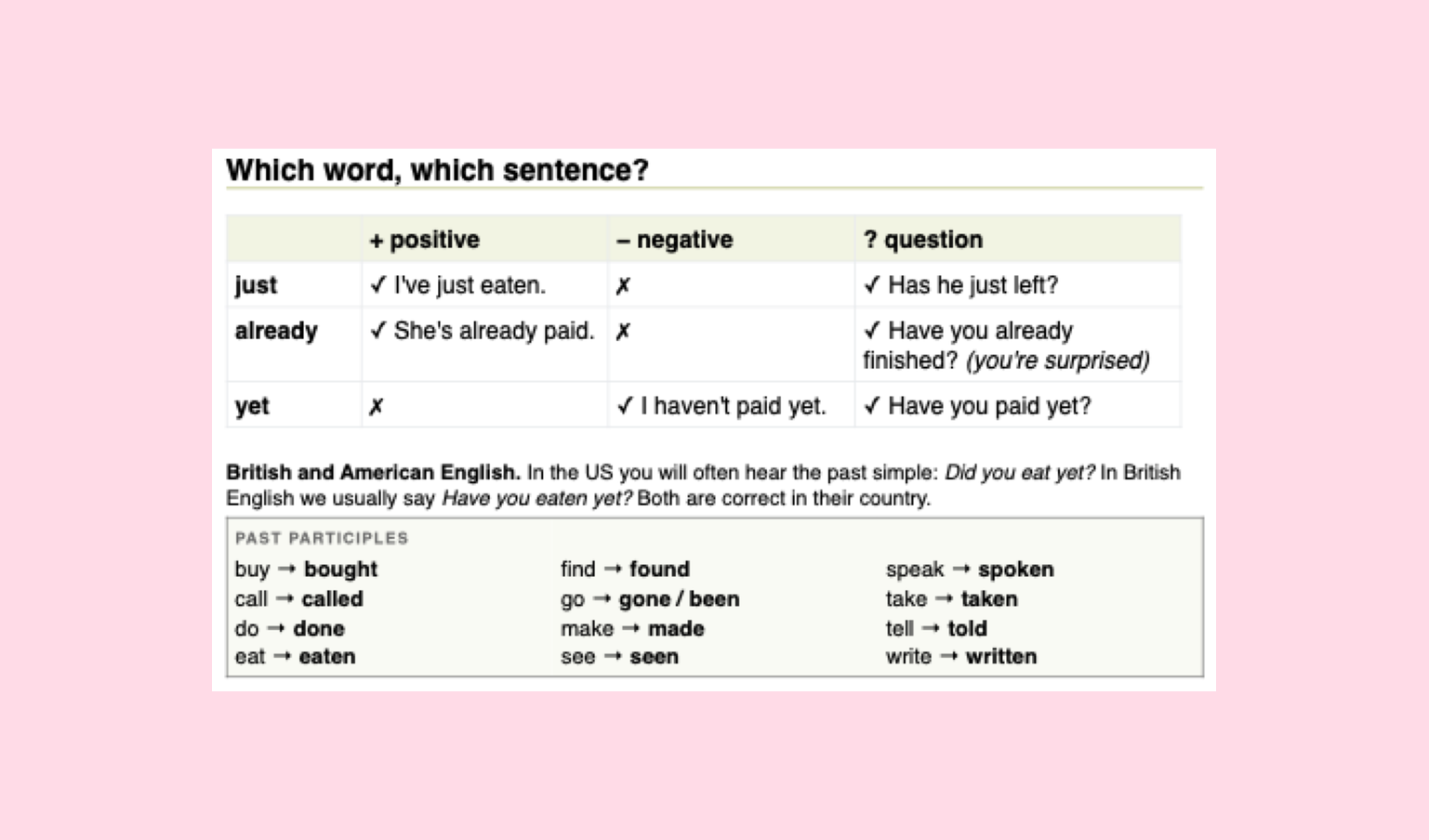
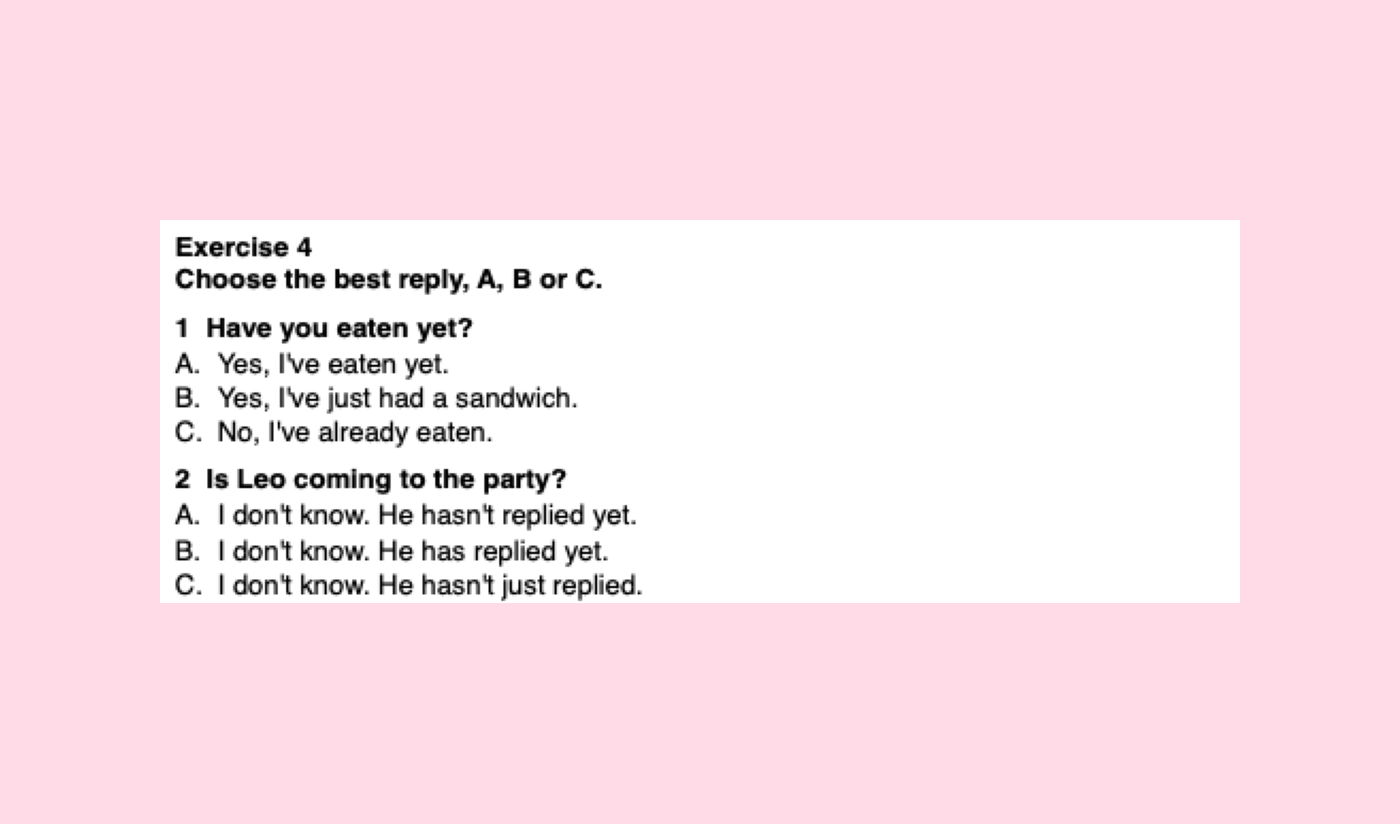
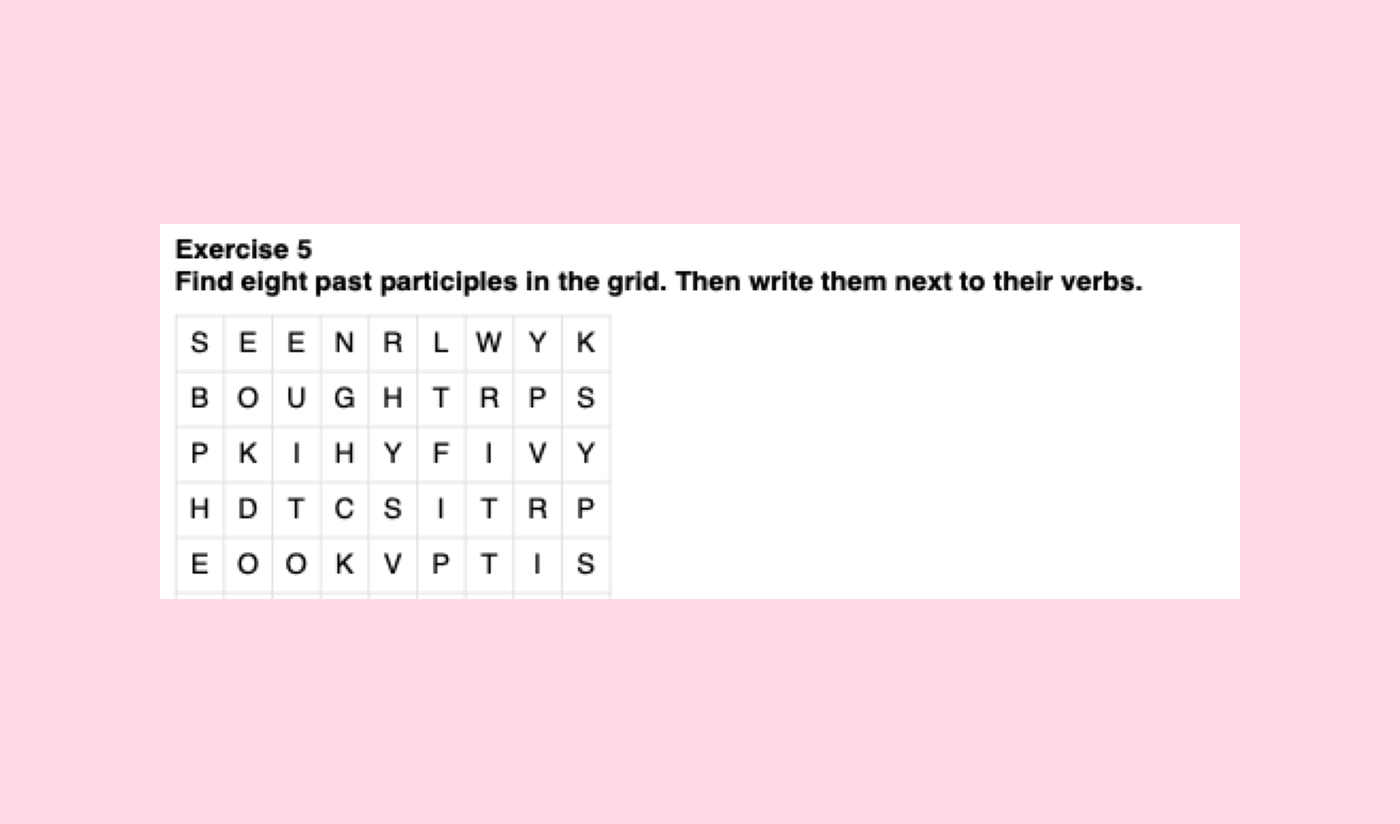
Six hours before Gran's 90th birthday, the family group chat is busy. The cake? Priya has already ordered it. The balloons? Tom has just picked them up. The present? Nobody has bought it yet. That chat is the whole lesson: three small words that say when something happened and whether you expected it. Students match each word to its meaning, then a sentence-strip diagram shows exactly where each one sits, because position is where most mistakes happen (I haven't yet bought it). A short table shows which word works in positive sentences, negatives and questions, with a note on why Americans say Did you eat yet? A list of past participles sits on the same page for quick reference. The eight exercises move from Dani's party checklist and putting the word in the right place to choosing the most natural reply, a past participle word search and explaining what has just happened from a clue (Tom is all wet). Students finish with their own week: three things they've already done and three they haven't done yet. Every task works for self-study, and the teacher copy adds the answers, a board plan and concept-check questions.