Lesson overview:
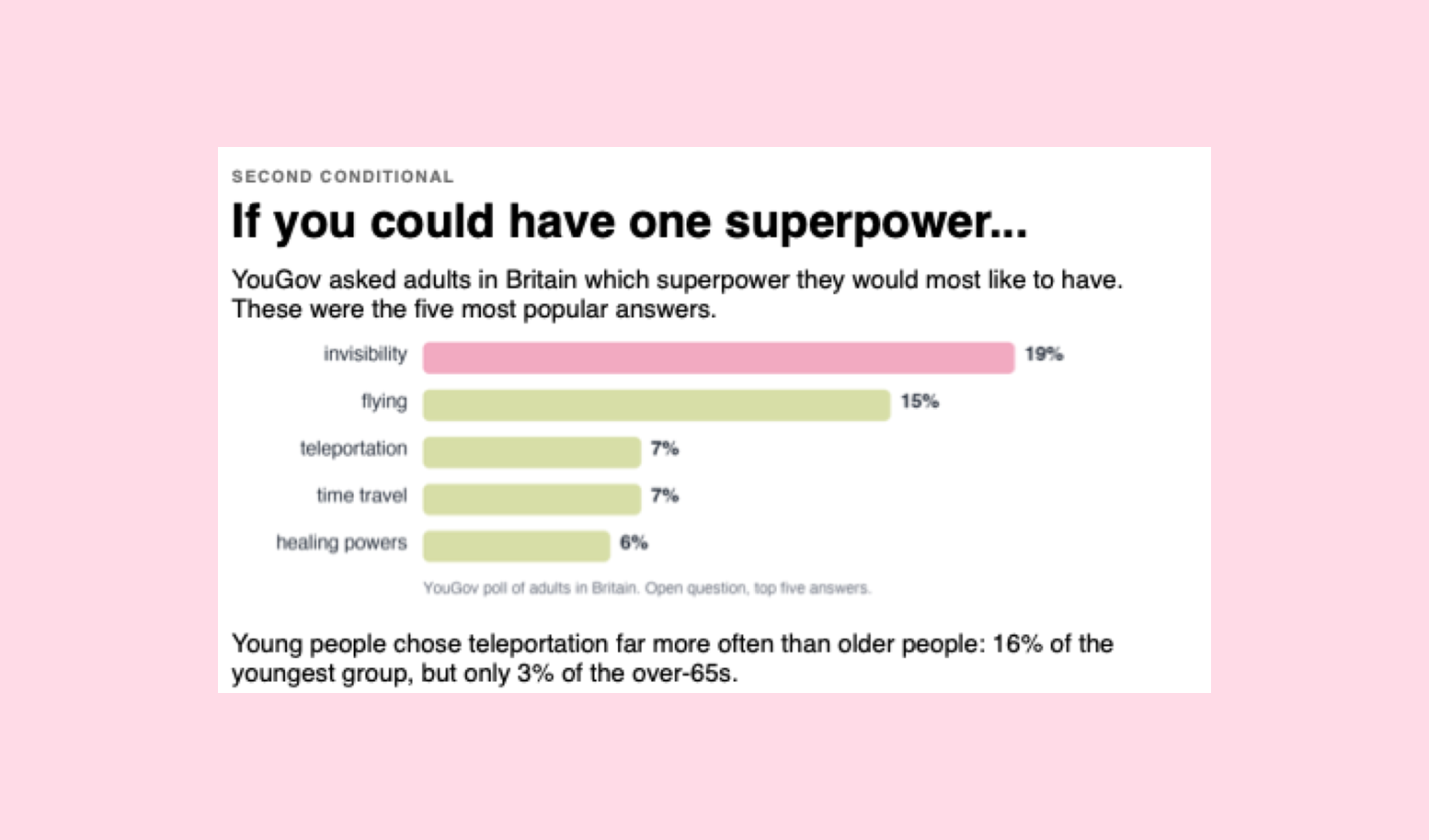
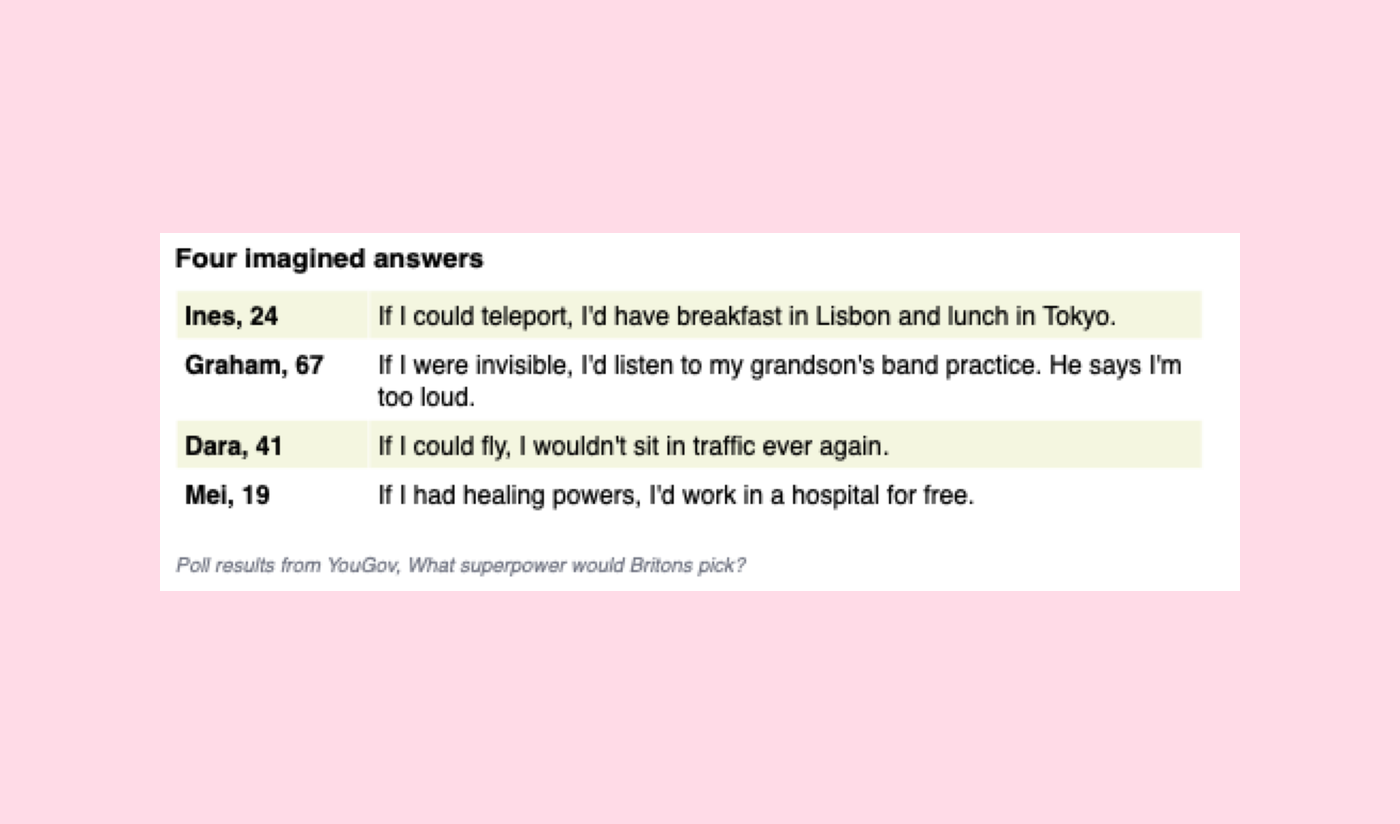
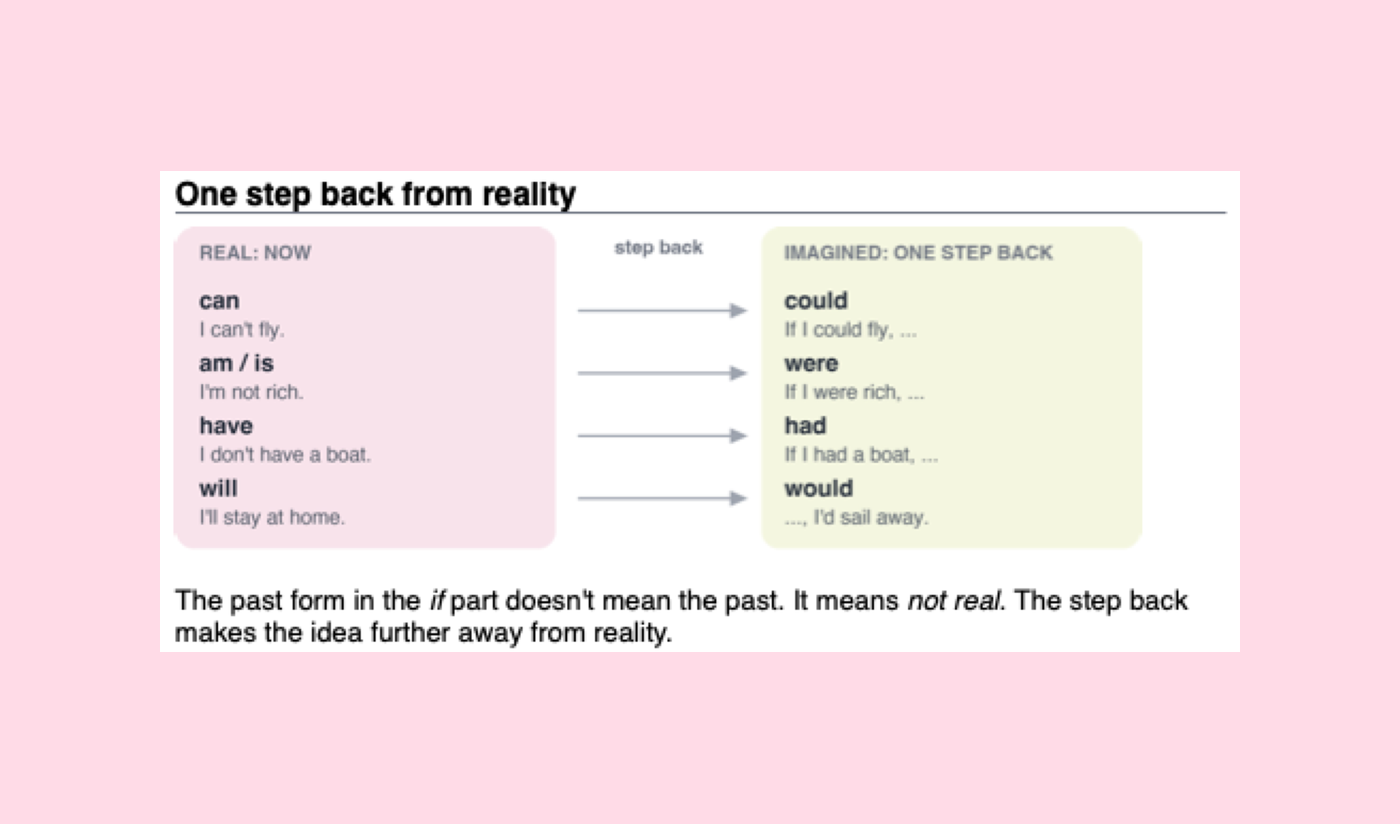
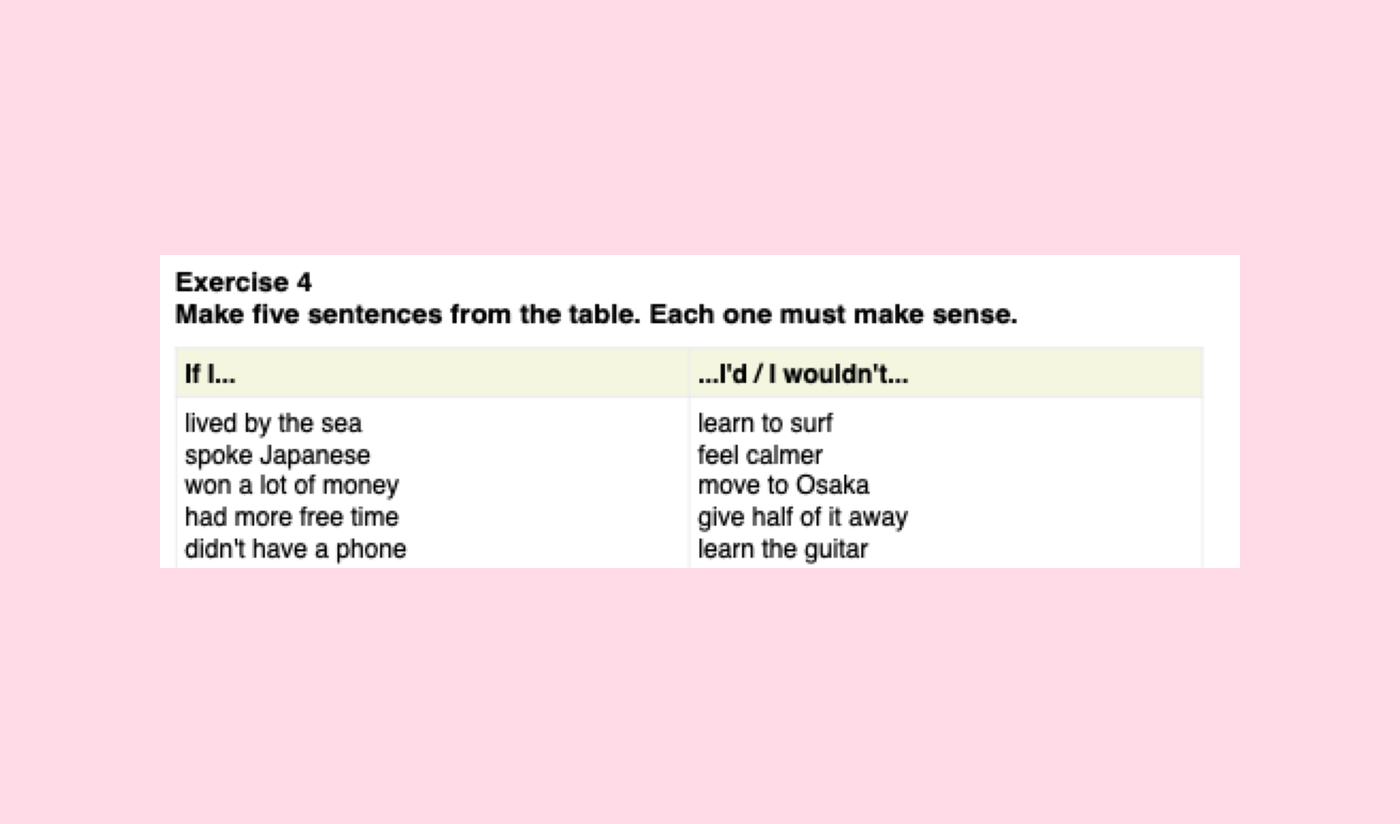
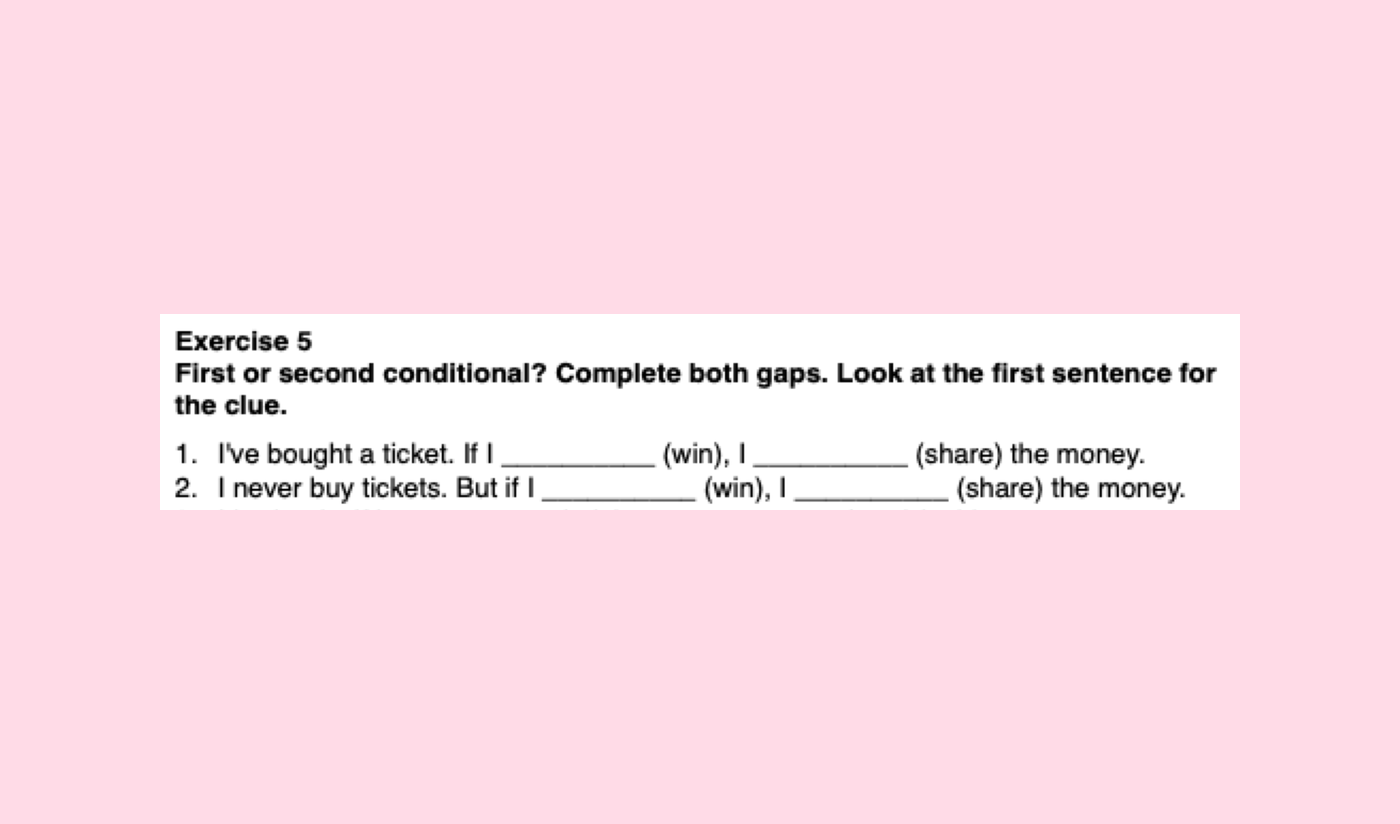
Nineteen per cent of British adults would choose invisibility. Fifteen per cent would fly. In the youngest group, 16% picked teleportation; among the over-65s, just 3%. These are real results from a YouGov poll, and they open this worksheet because the question behind them, what would you do if...?, is the second conditional in one line. Four imagined answers follow (If I were invisible, I'd listen to my grandson's band practice), then the key comparison. Ana has a lottery ticket and says If I win, I'll buy a flat; Tom never plays and says If I won, I'd buy a boat. Students answer four questions with a fold-back answer column to see why Tom's past tense isn't about the past. A diagram shows the second conditional as one step back from reality: can becomes could, am becomes were, will becomes would. A short list covers If I were you, the two meanings of 'd and how to choose between the first and second conditional. The exercises include advice with If I were you, I'd..., a sentence-building table, moral dilemmas (a found wallet, a friend's terrible haircut) and a short piece about a week without phones.
Add it to a class plan and keep track of what you've taught.