Lesson overview:
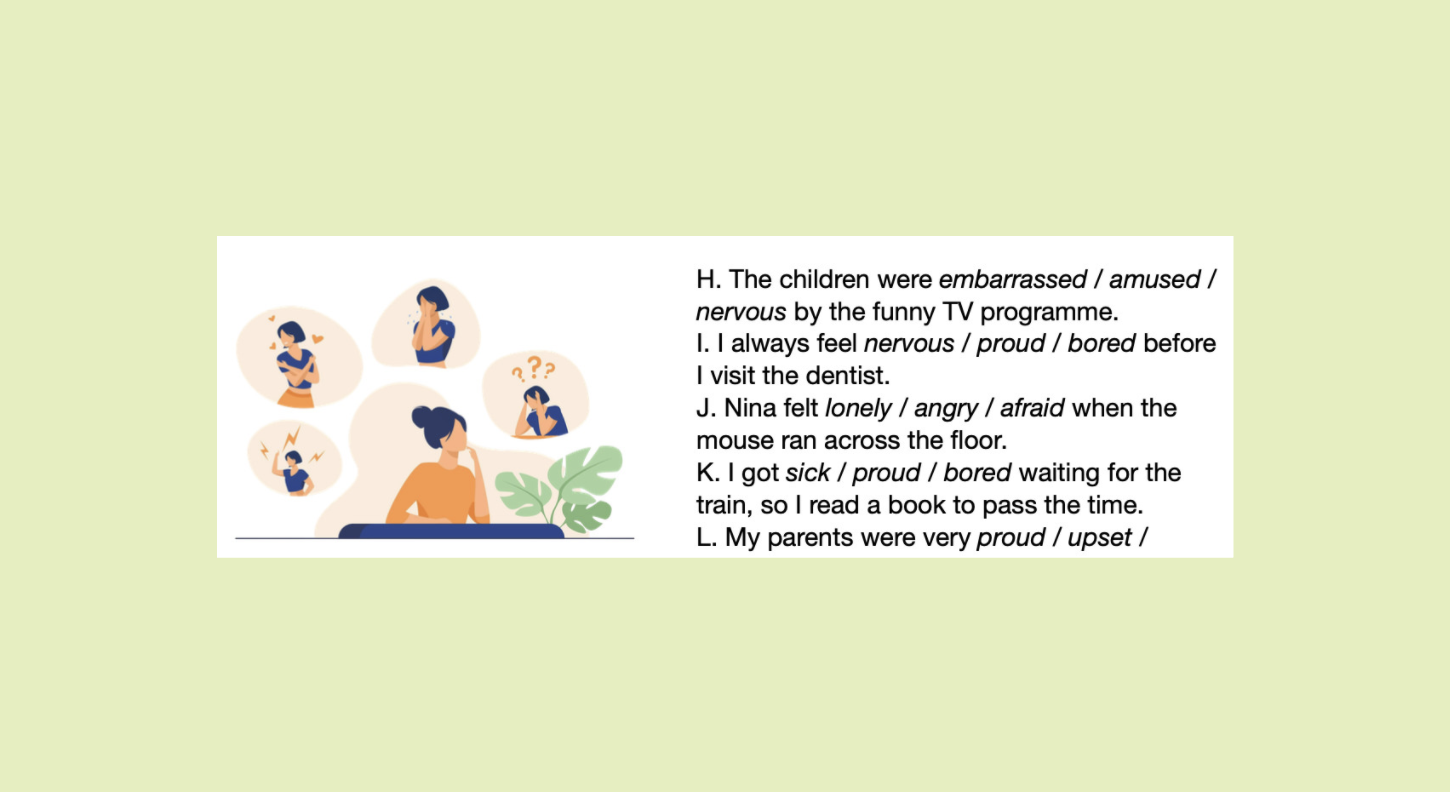
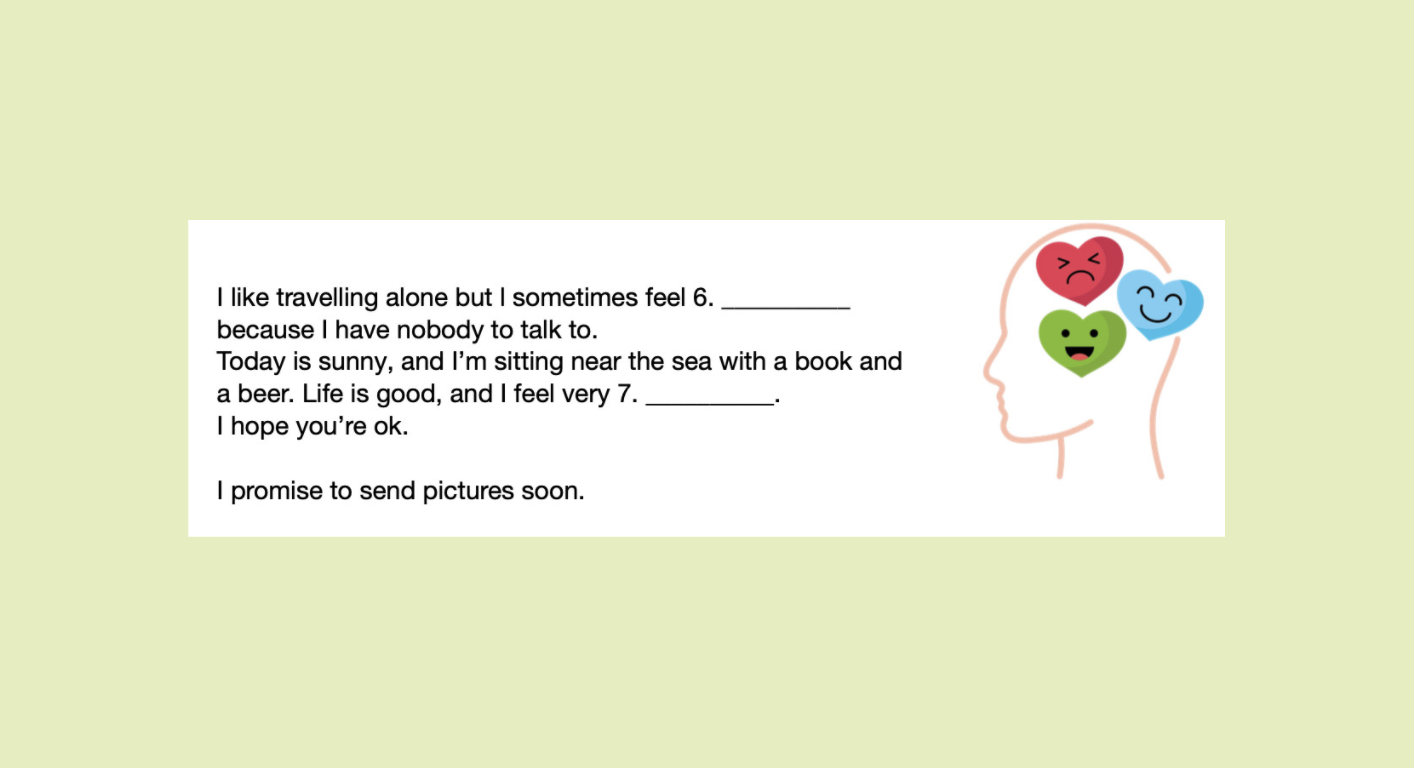
In this lesson, students practise everyday adjectives for feelings and emotions, such as angry, bored, excited, sick, upset, afraid, stressed, and relaxed.
By the end of the lesson, students will be able to:
- name common feelings and emotions in English;
- explain why someone feels a certain way;
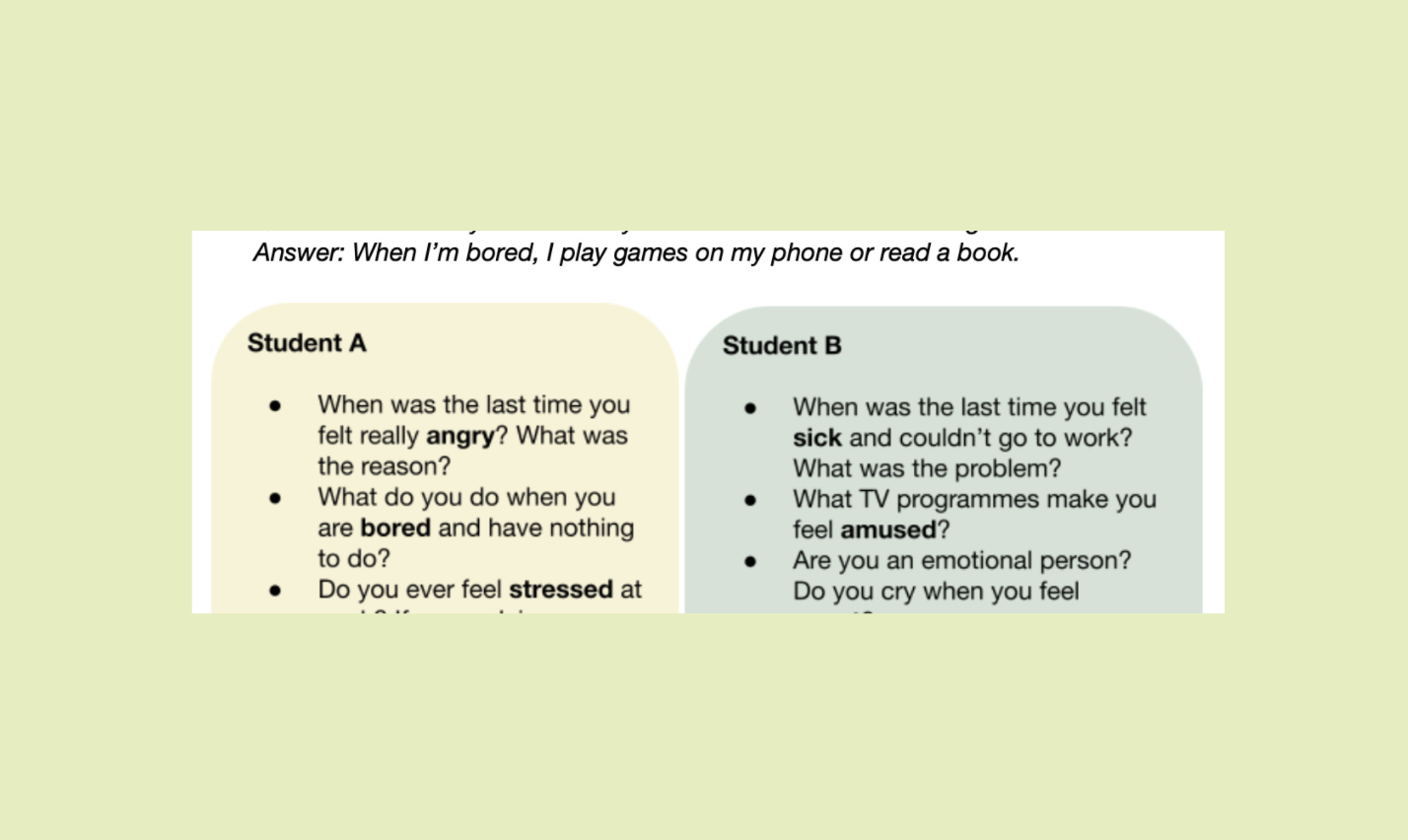
- answer simple personal questions about moods and experiences.
Lead-in:
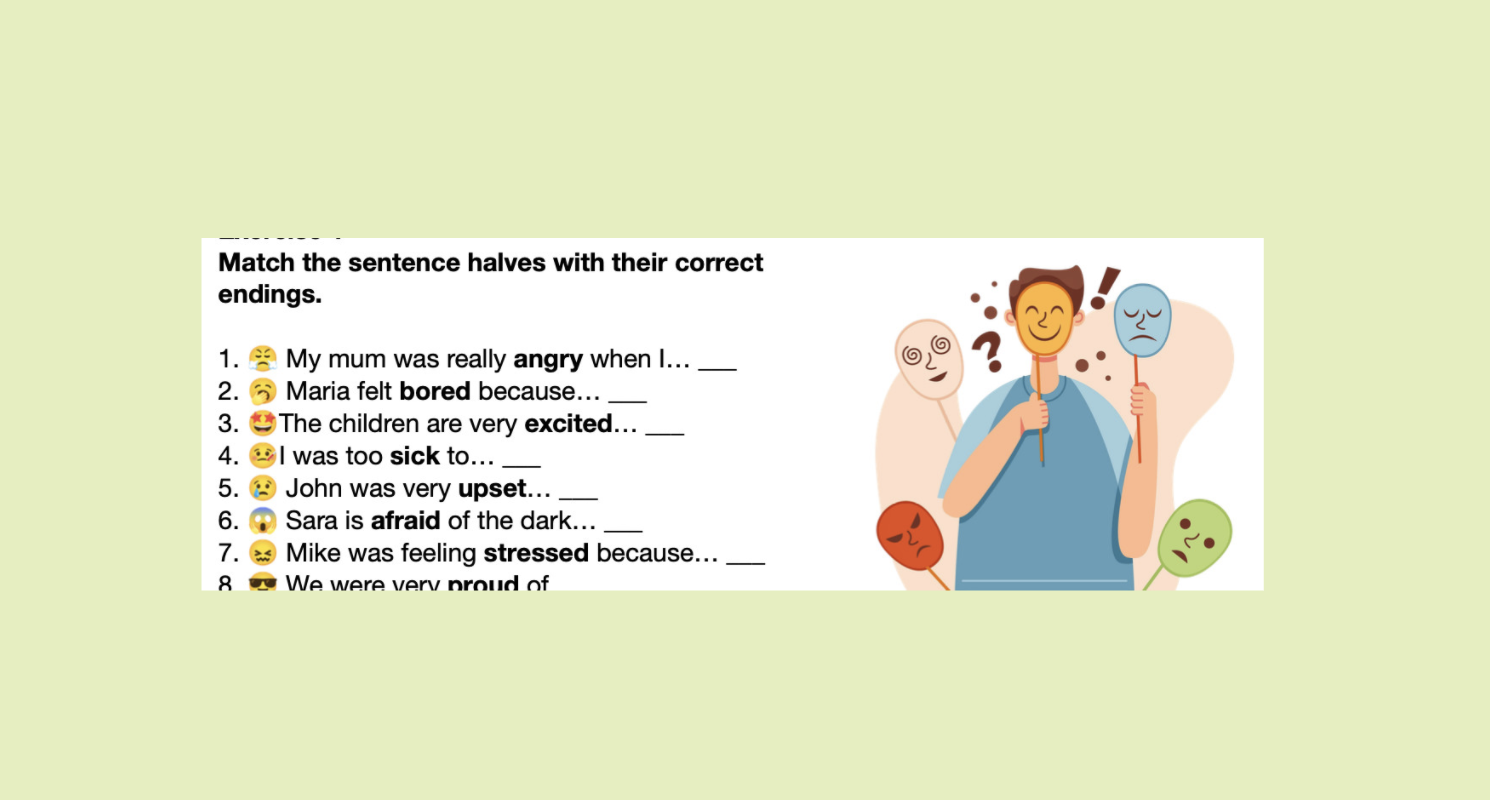
Students start by matching sentence halves about familiar emotional situations, such as feeling angry after failing a test, bored with nothing to do, or proud when someone passes an exam. The emoji prompts make the task visual and accessible, helping students guess meaning before moving into clearer definitions.
Teaching Tips
We've added a few helpful tips where they're most needed—just little nudges to make your lessons run more smoothly. Whether it's setting up a task or tackling a tricky grammar point, these suggestions are here to make your teaching life easier.
Add it to a class plan and keep track of what you've taught.