Lesson overview:
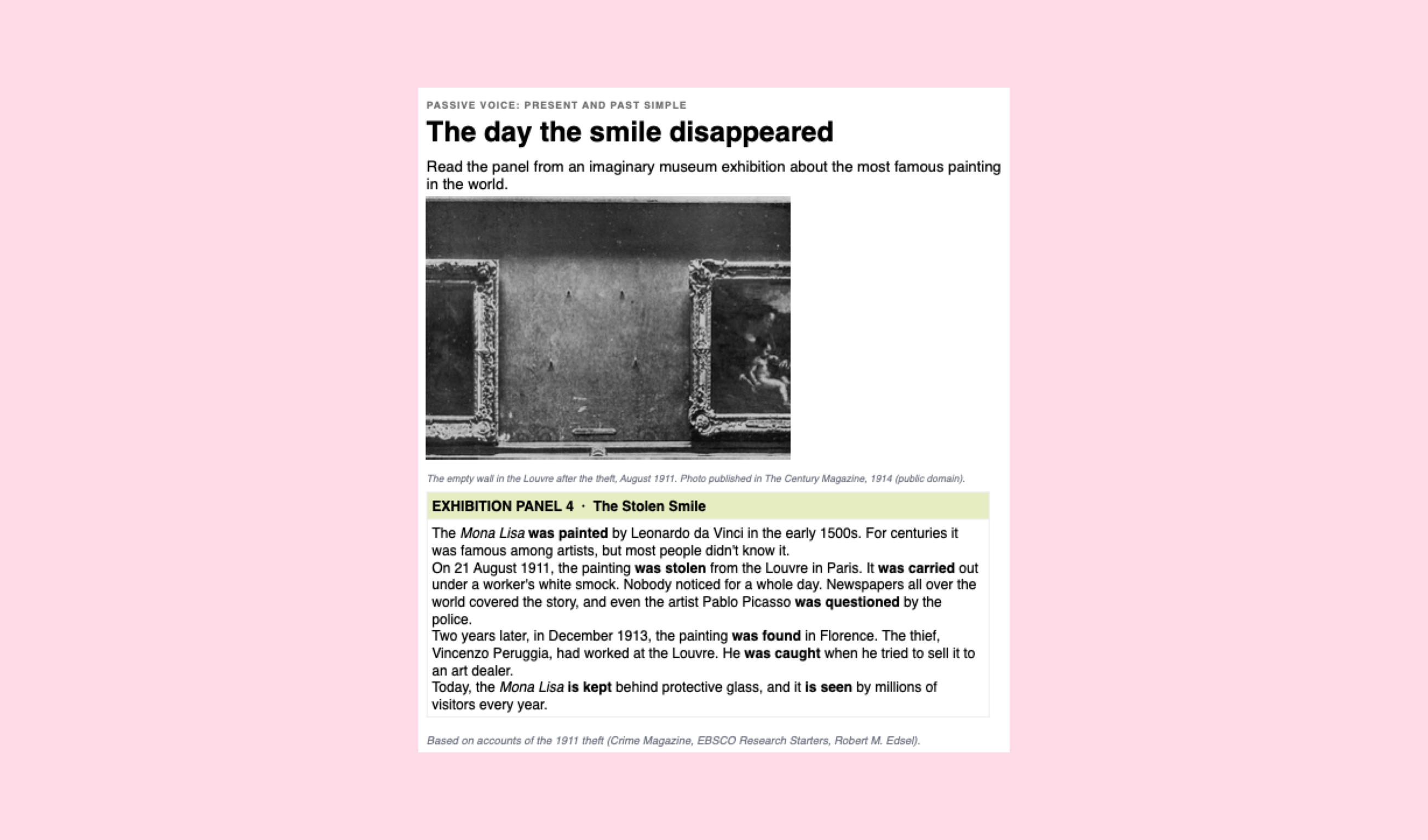
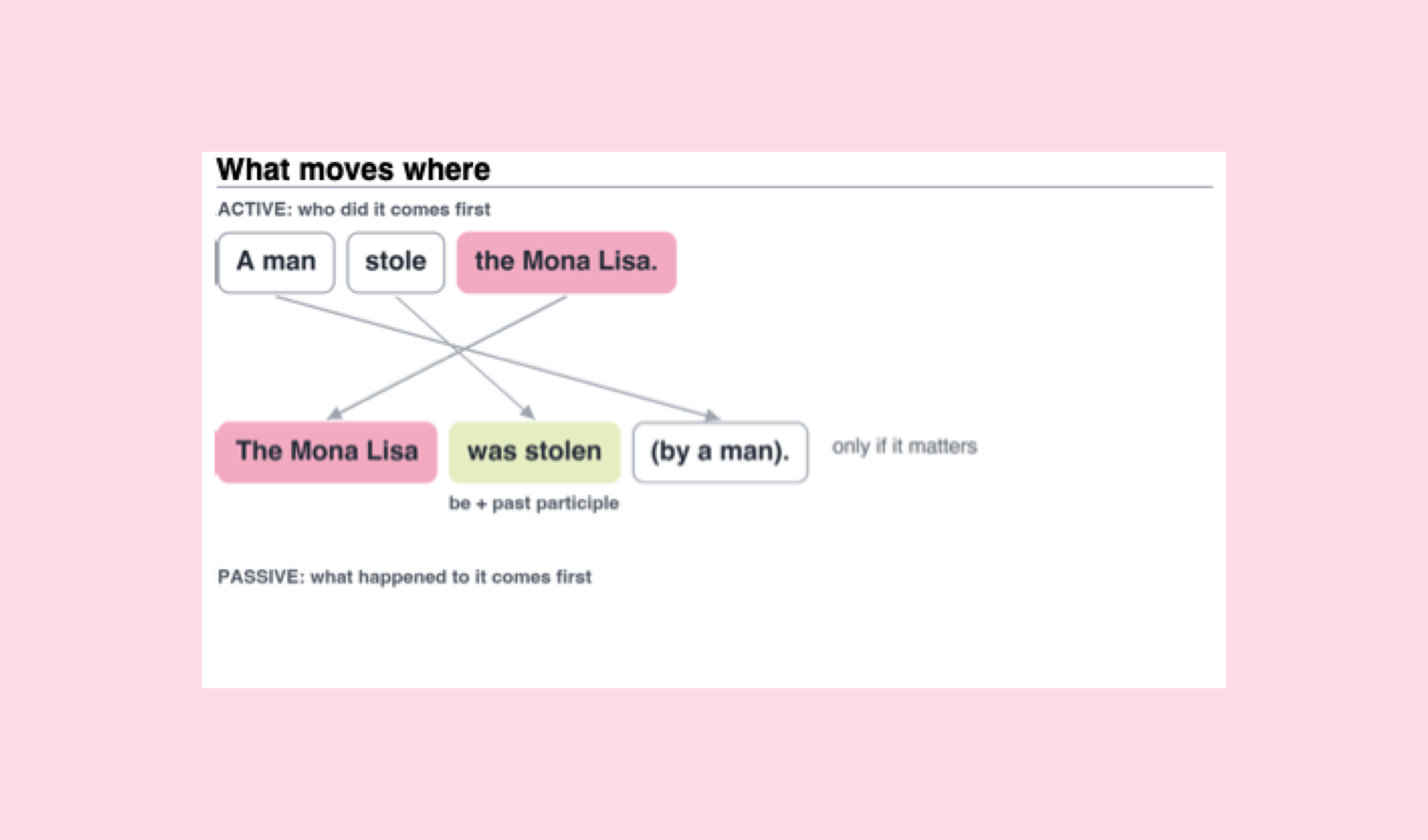
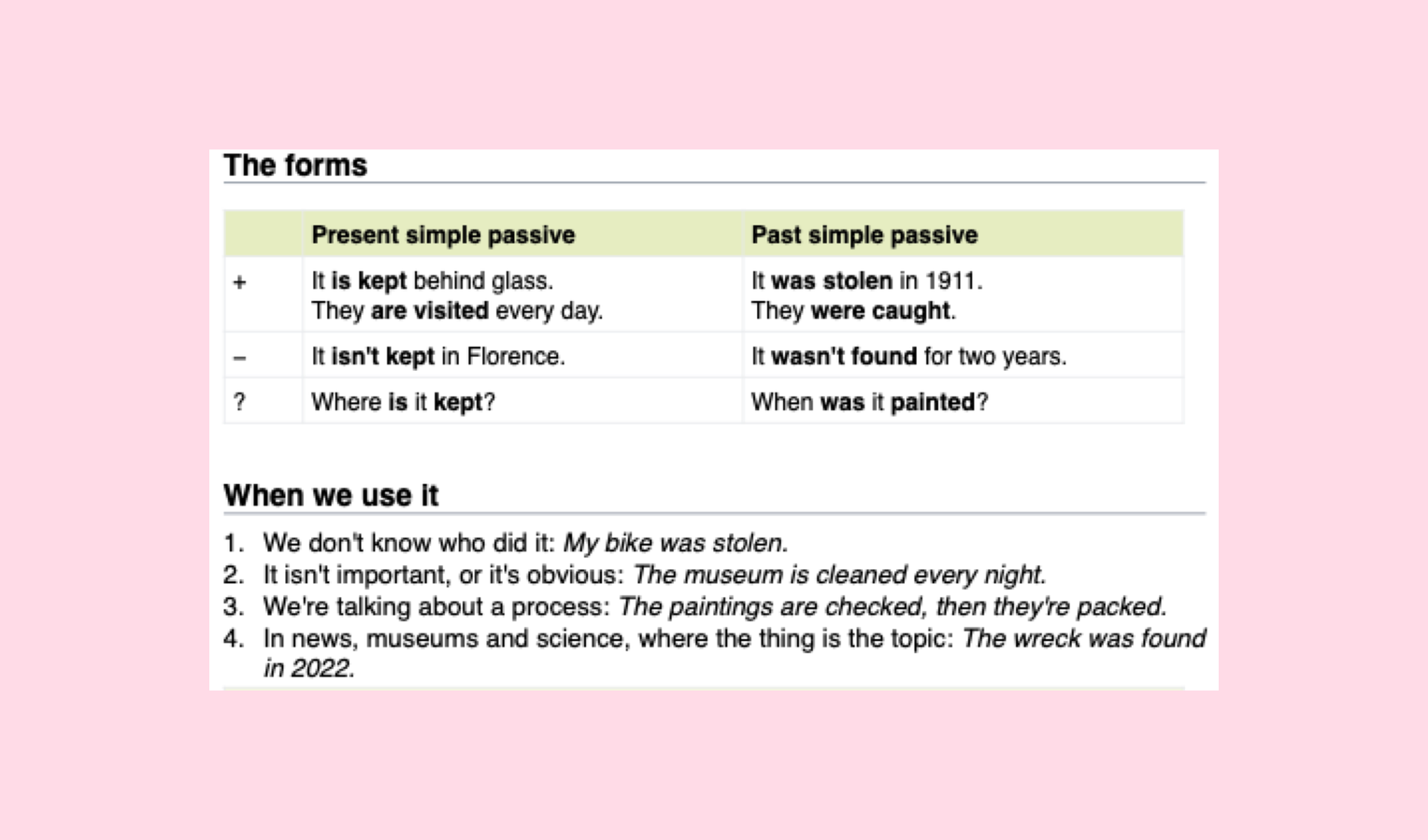
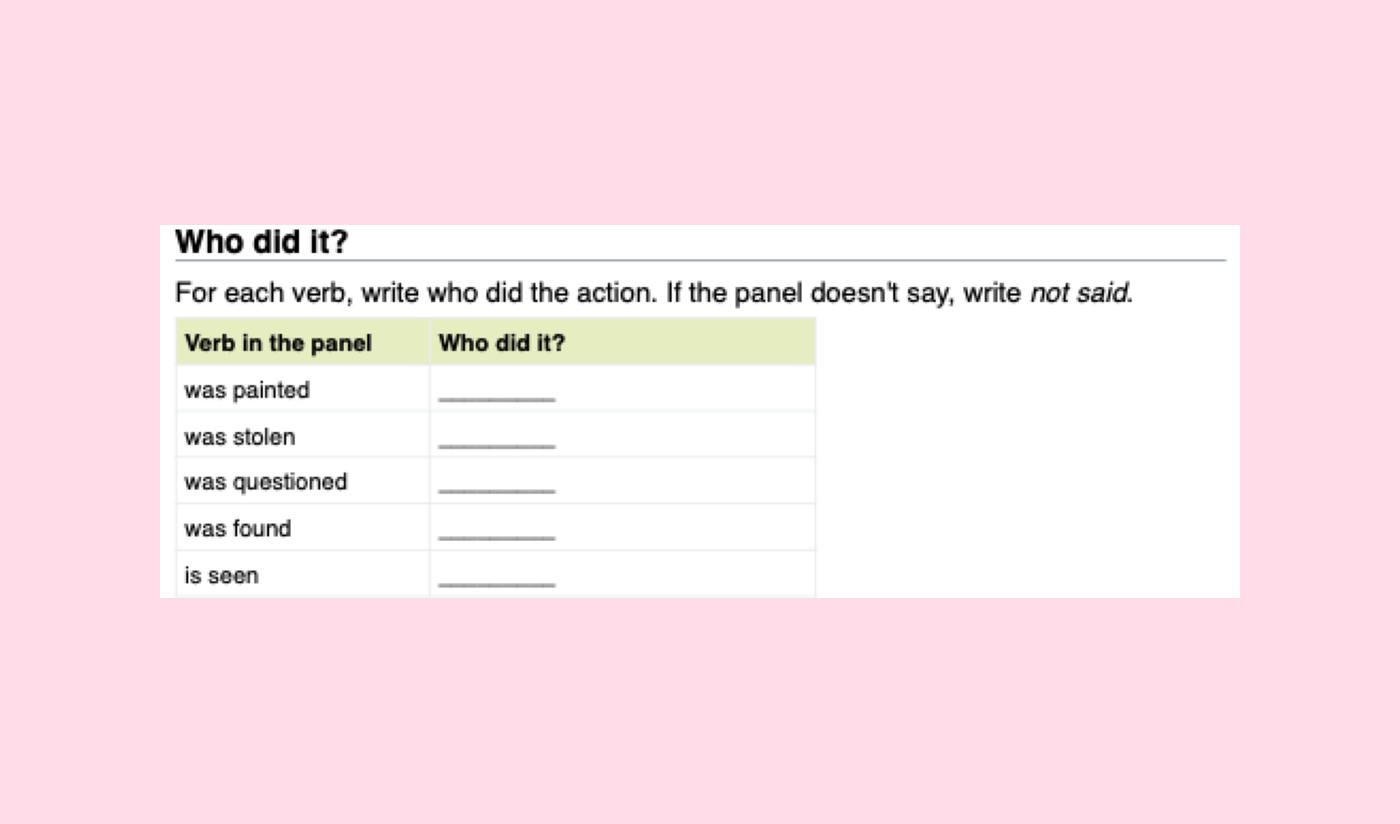
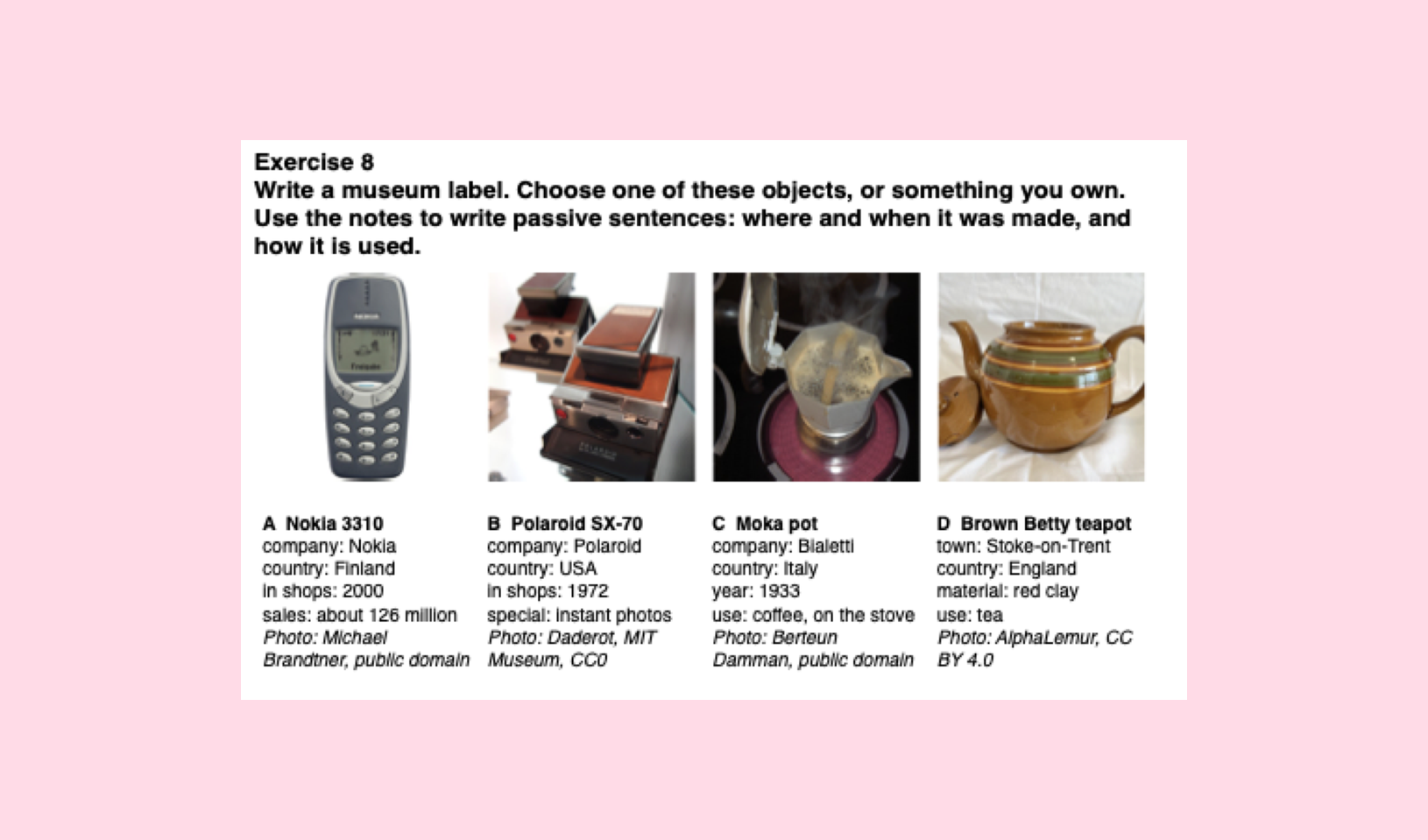
The passive is the voice of museum labels, news headlines and instructions: anywhere the thing matters more than the person who did it. That's why this worksheet starts in a museum. A panel from an imaginary exhibition tells the story of the most famous art theft in history. On 21 August 1911 the Mona Lisa was stolen from the Louvre, carried out under a worker's white smock, and found in Florence two years later. Today it is kept behind glass and seen by millions of visitors every year. Students fill in a table: who did each action? Sometimes the panel says (painted by Leonardo da Vinci), sometimes it doesn't, and that gap is the point of the passive. A diagram shows the words moving from the active sentence to the passive one, with *by...* marked as optional. A form table covers the present and past simple passive in positive, negative and question forms, and four short notes explain when we use it. The exercises use facts about the Louvre, the painting's history in dates, a step-by-step process (how a painting travels to an exhibition), newspaper headlines and passive questions. Students finish by writing a museum label for an object they own. The answers to the guide are printed in random order for self-checking, and the teacher copy has the full key and a troubleshooting table.
Add it to a class plan and keep track of what you've taught.