Lesson overview:
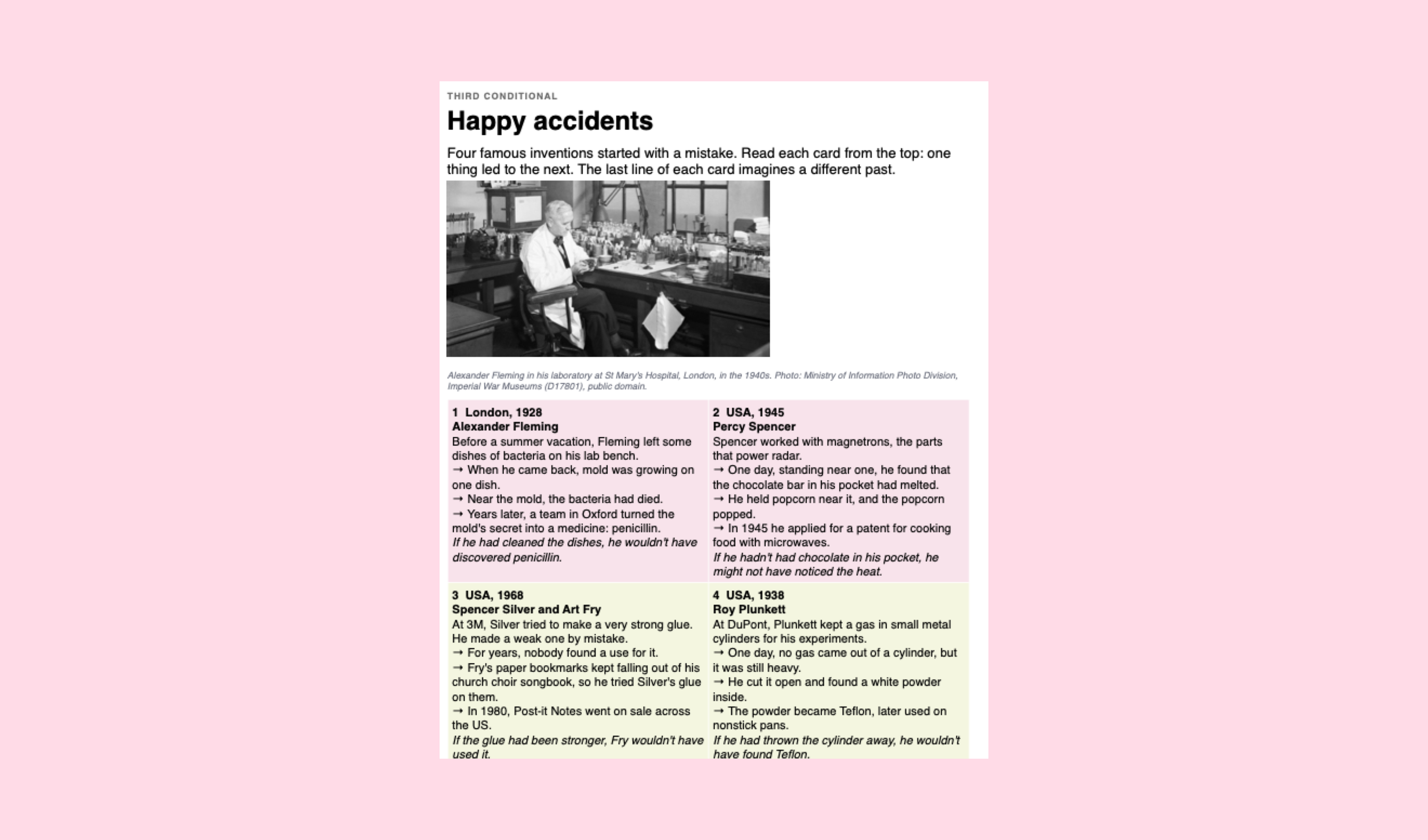
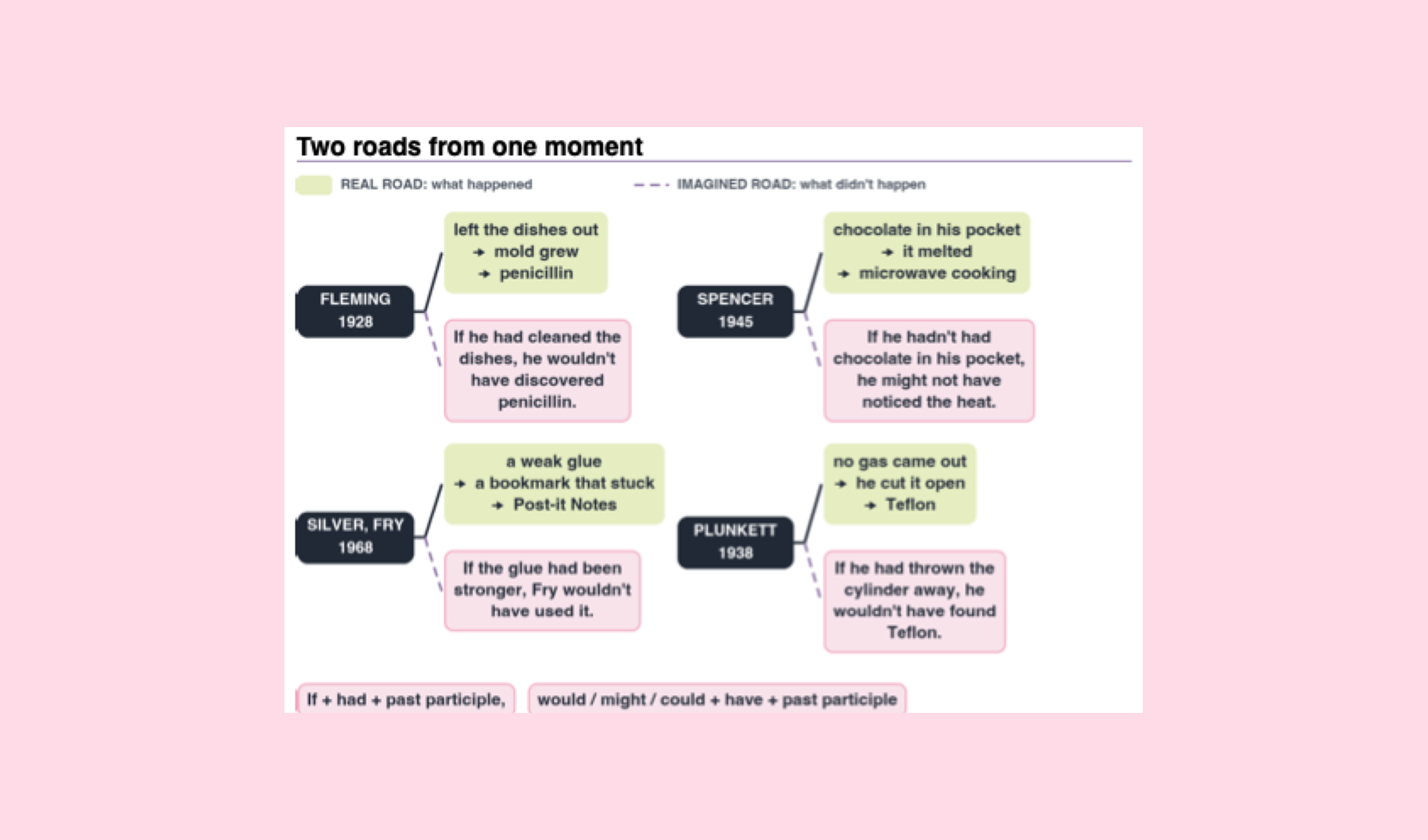
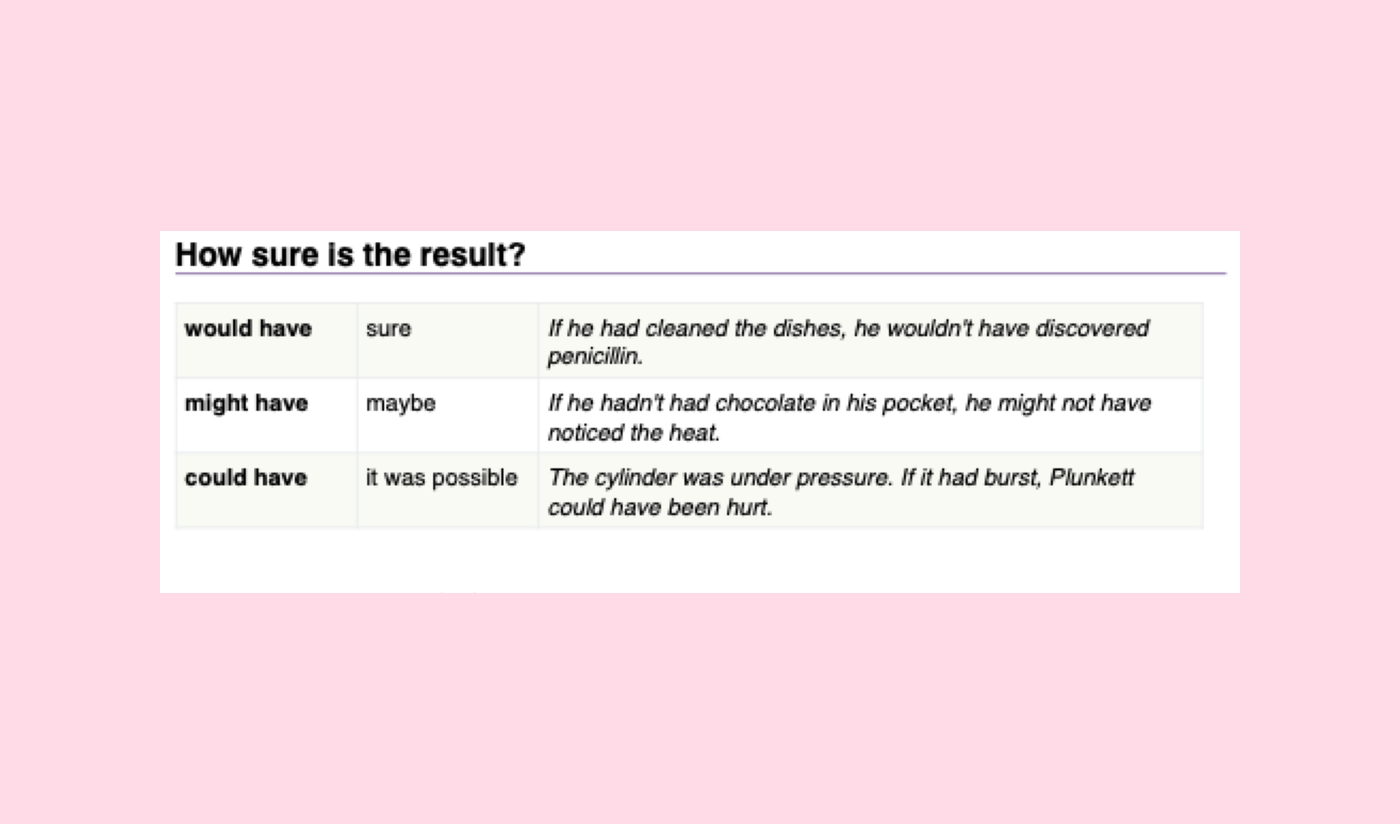
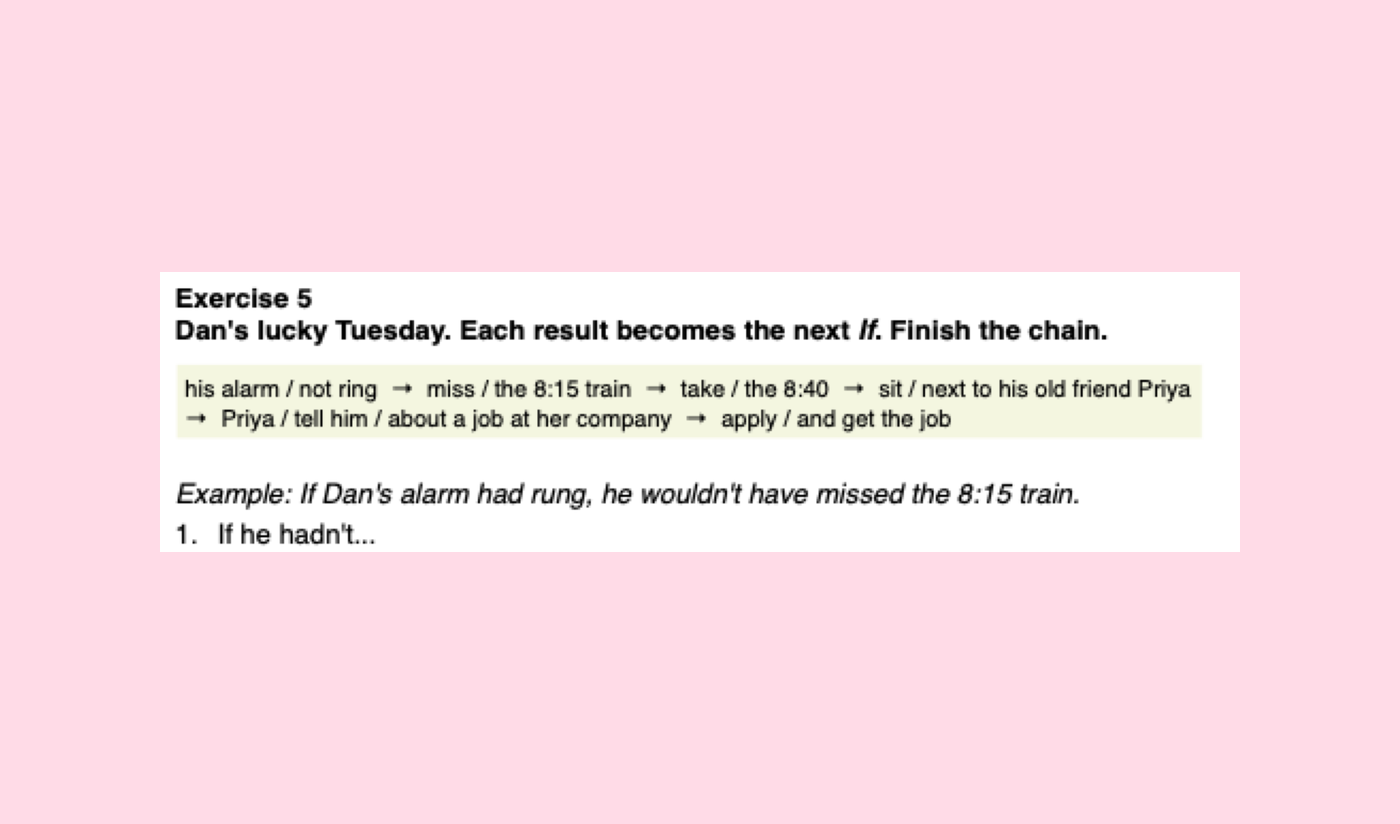
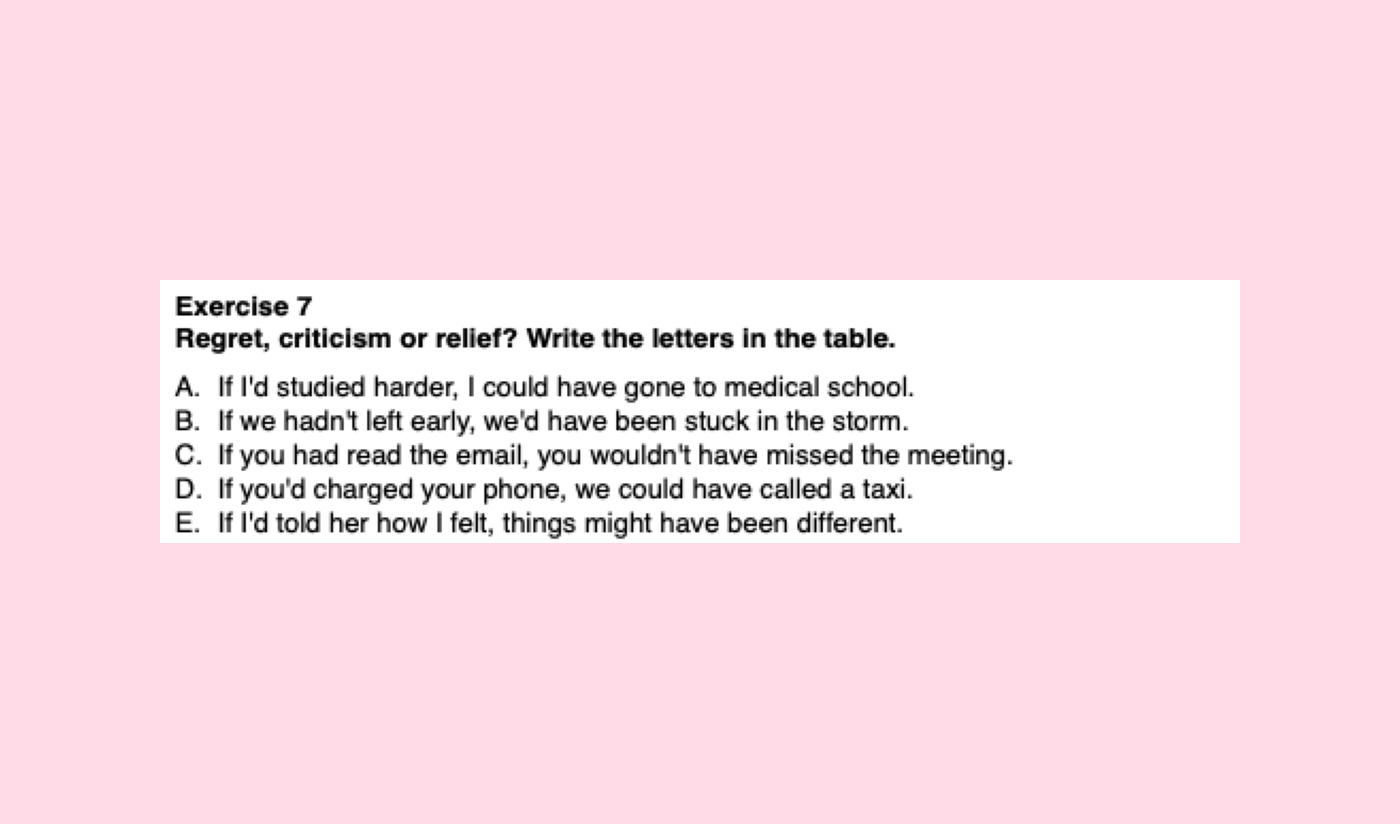
Penicillin, the microwave oven, Post-it Notes and Teflon all exist because something went slightly wrong. Alexander Fleming left dishes of bacteria on his bench before a vacation in 1928. Percy Spencer found a melted chocolate bar in his pocket. Spencer Silver made a glue that was too weak, and Roy Plunkett opened a gas cylinder that gave no gas. The sheet tells each story as a short chain of cause and result, and every card ends with one imagined sentence: If he had cleaned the dishes, he wouldn't have discovered penicillin. Students decide what really happened and what is only imagined, then check themselves on a fork-in-the-road diagram that puts the real road next to the imagined one. The guide covers positive, negative and question forms, the two meanings of 'd in a single sentence, how might have and could have soften the result, and the three jobs the third conditional does in real life: regret, criticism and relief. A short note shows where the mixed conditional begins. Practice moves from true or false on the stories to sentence building, "which is more natural?" pairs, odd one out, a chain of consequences to finish, a story with letter hints and sorting by use, and ends with each student's own happy accident. The teacher copy explains why each tricky answer is right.
Add it to a class plan and keep track of what you've taught.